

SYNCHRONIZED SKATING
What is Synchronized Skating? Rules, Teams & How It Works
04 May 2026
If you are new to Synchronized Skating, this complete guide covers everything you need to know, from rules and scoring to competition formats and the new Synchro9 format shaping the future of the sport.
Synchronized Skating is one of the fastest-growing disciplines in figure skating, combining teamwork, speed, precision and artistry on the ice.
What is Synchronized Skating?
Synchronized Skating is a team-based discipline of figure skating where up to 16 skaters perform together in perfect unison. Teams execute complex formations, transitions and elements while skating at high speed.
What Are Key Characteristics of Synchronized Skating?
- Teams skate as one unit
- Precision, timing and spacing are critical
- Complex formations and transitions
- High speed combined with control
Popular Elements Include:
- Blocks, circles, lines and wheels
- Intersections (signature high-speed crossings)
- Lifts and group elements
- Step sequences and intricate footwork
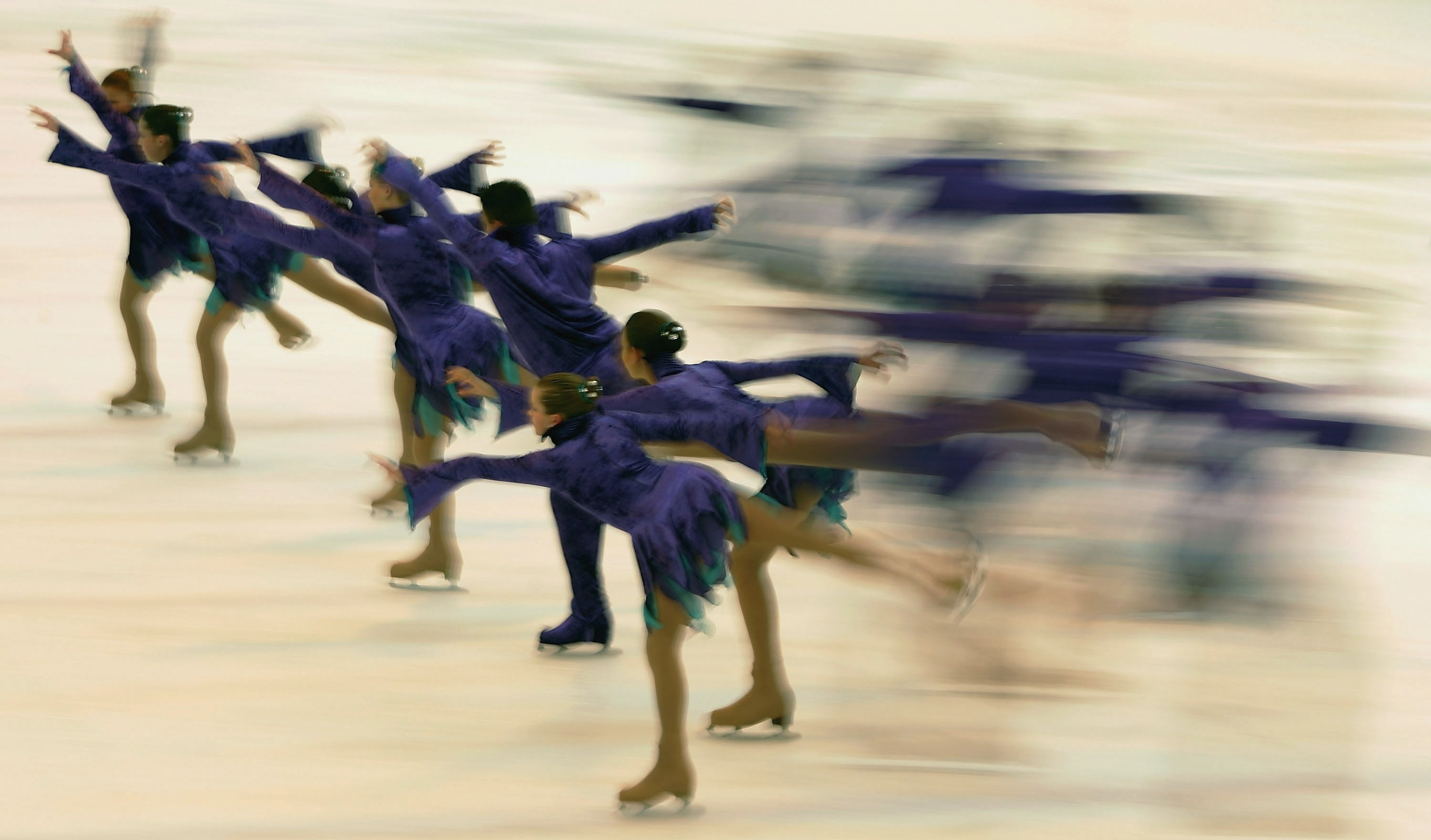
Ice Crystals team perform during the Junior Synchronized Free skate at the Australian Figure Skating Championships 2005 in Perth, Australia. © Getty Images
History of Synchronized Skating
- Synchronized Skating originated in the 1950s in Ann Arbor, where it was first developed as a team-based form of skating to entertain during hockey intermissions. Formerly known as Precision Skating, the discipline evolved over time into a structured competitive sport.
- Today, Synchronized Skating is practiced worldwide, with teams competing at national and international level.
- The International Skating Union officially governs the discipline and launched the first Synchronized Skating World Championships in 2000, marking a major milestone in its global recognition.
- Today, top teams from countries like Finland, Canada, the USA and Sweden compete at elite level.
Synchronized Skating Competition Format
Teams compete with two programs:
- Short Program (approx. 2 minutes 50 seconds)
- Free Skating (approx. 4 minutes)
Each program includes required elements and is performed to music, combining technical difficulty with choreography and storytelling.
Competitions range from junior to senior level, with the World Championships representing the highest level of the sport.
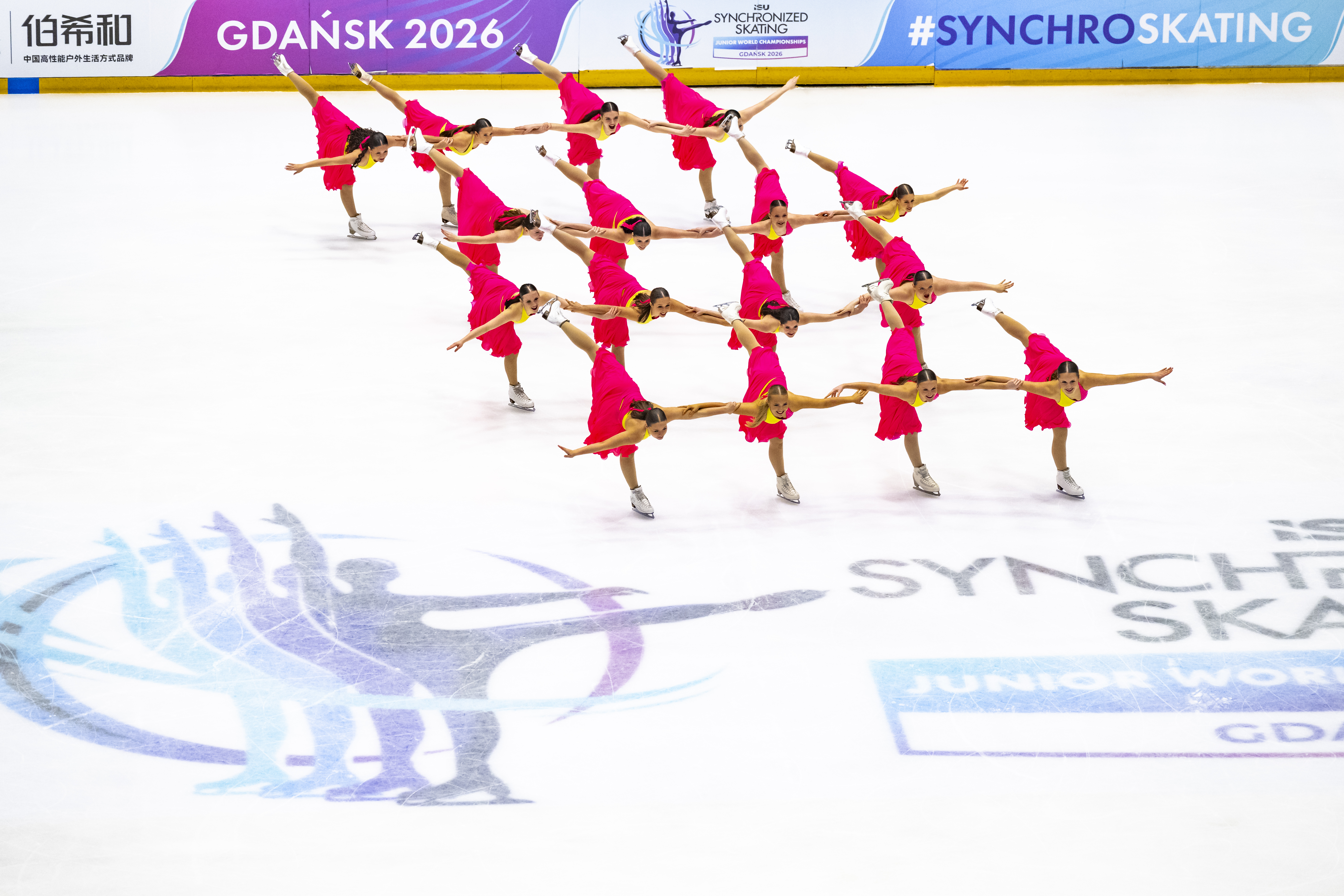
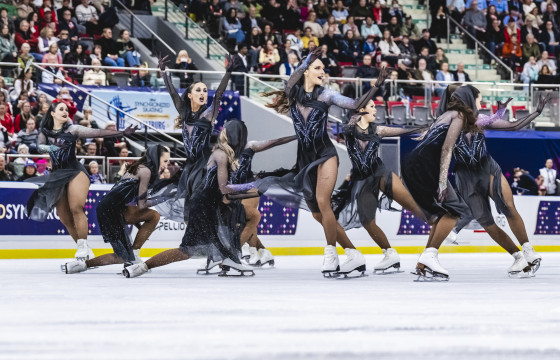
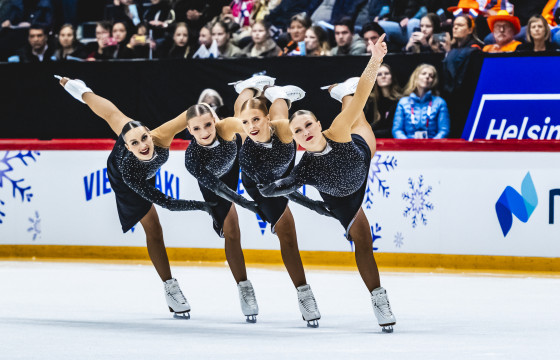
Team Berlin Junior competes during the ISU Synchronized Skating Junior World Championships 2026 in Gdansk, Poland. © ISU
How Synchronized Skating is Scored?
Synchronized Skating uses the ISU Judging System, similar to other Figure Skating disciplines.
1. Technical Element Score (TES):
- Based on difficulty and execution of elements
- Includes levels and grades of execution
2. Program Component Score (PCS):
- Composition
- Presentation
- Skating Skills
Final results are determined by combining both program scores. The team with the highest total score wins.
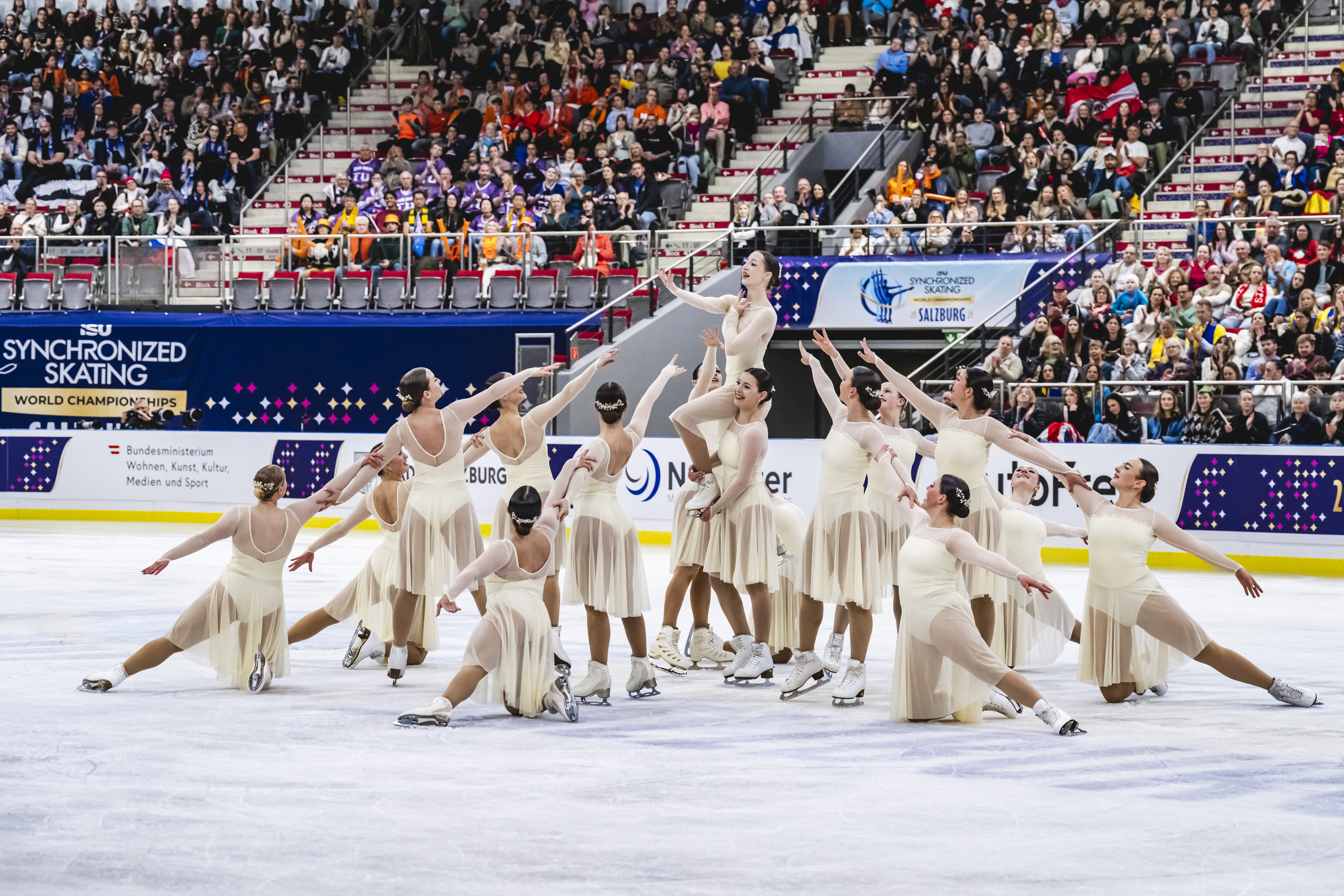
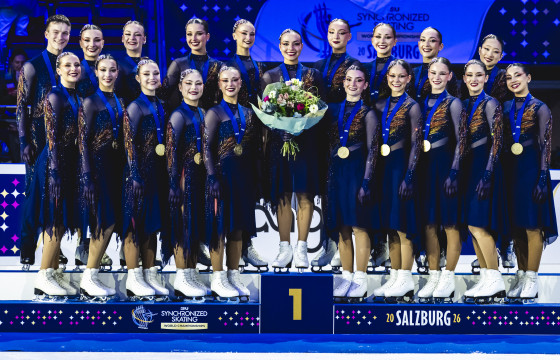
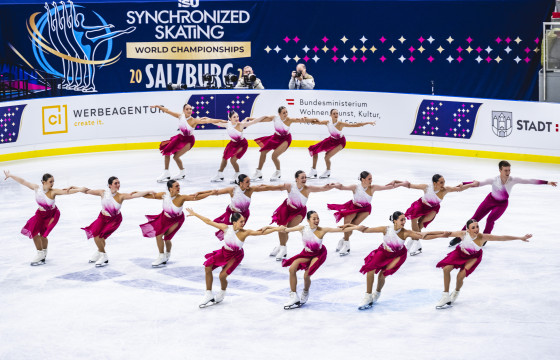
Team Colibris Vienna Senior performs during the ISU Synchronized Skating World Championships 2026 in Salzburg, Austria © ISU
What Makes Synchronized Skating Unique?
Synchronized Skating stands out because of its team dynamic:
- Up to 16 skaters moving in perfect synchronization
- Split-second timing across the entire team
- One mistake can affect the whole performance
- Strong emphasis on unity, trust and cohesion
At elite level, performances are not just technical, they are visually powerful and emotionally engaging.
Synchro9: The New Format in Synchronized Skating
A major innovation in the sport is Synchro9, a new format designed to modernize and grow Synchronized Skating.
What is Synchro9?
- Teams consist of 9 skaters
- Faster, more dynamic and easier to follow
- Knockout-style competition format
- Designed for broadcast, digital platforms and live entertainment
Benefits of Synchro9:
- Clearer formations for new audiences
- Higher speed and intensity
- More flexibility for events and formats
- Stronger connection to modern sports entertainment
Synchro9 has already been showcased at some major events last season and plays a key role in the future growth and Olympic ambitions of Synchronized Skating.
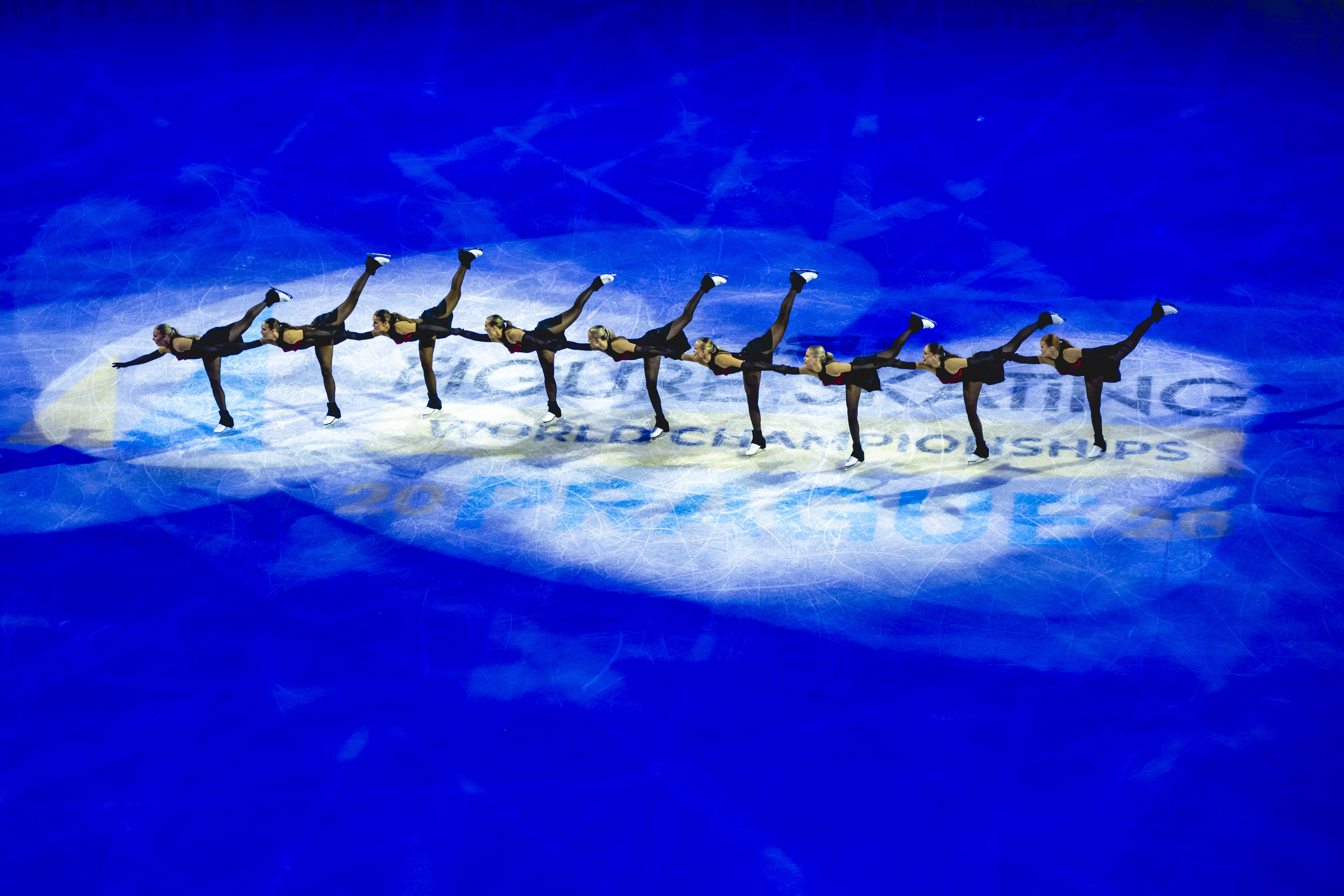
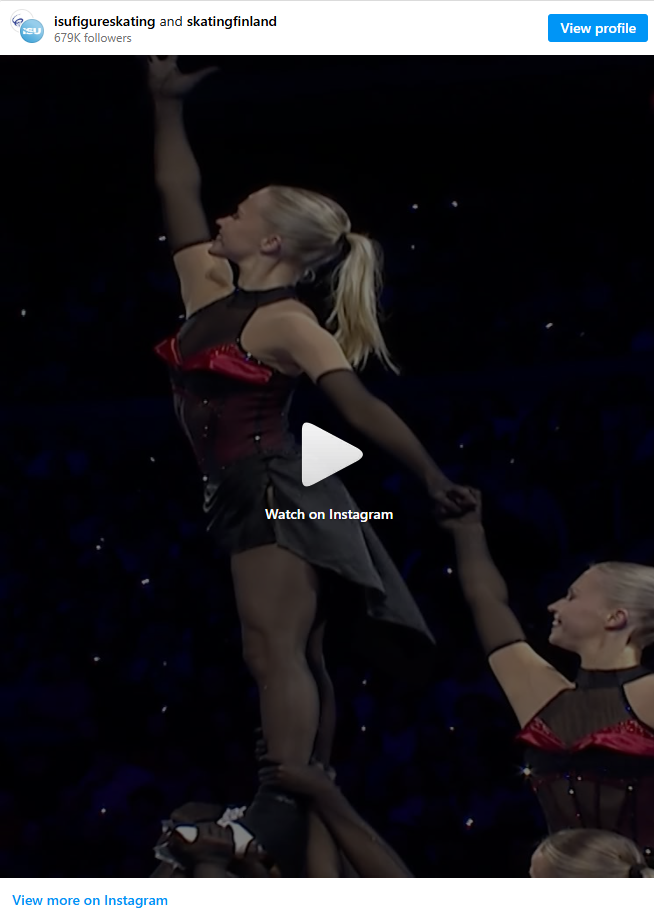
Synchro9 team from Finland performs during Gala Exhibition during ISU World Figure Skating Championships 2026 in Prague, Czech Republic. © ISU
Is Synchronized Skating an Olympic Sport?
Synchronized Skating is currently not part of the Olympic Winter Games program, but the sport continues to grow and gain global recognition under the International Skating Union.
A major step forward comes with Synchro9, which is set to feature at the 2028 Winter Youth Olympic Games. This milestone marks an important step toward potential future Olympic inclusion.
While Synchronized Skating is not yet on the Olympic stage at senior level, developments like Synchro9 highlight a clear long-term ambition to expand the sport within the Olympic movement and reach new audiences worldwide.
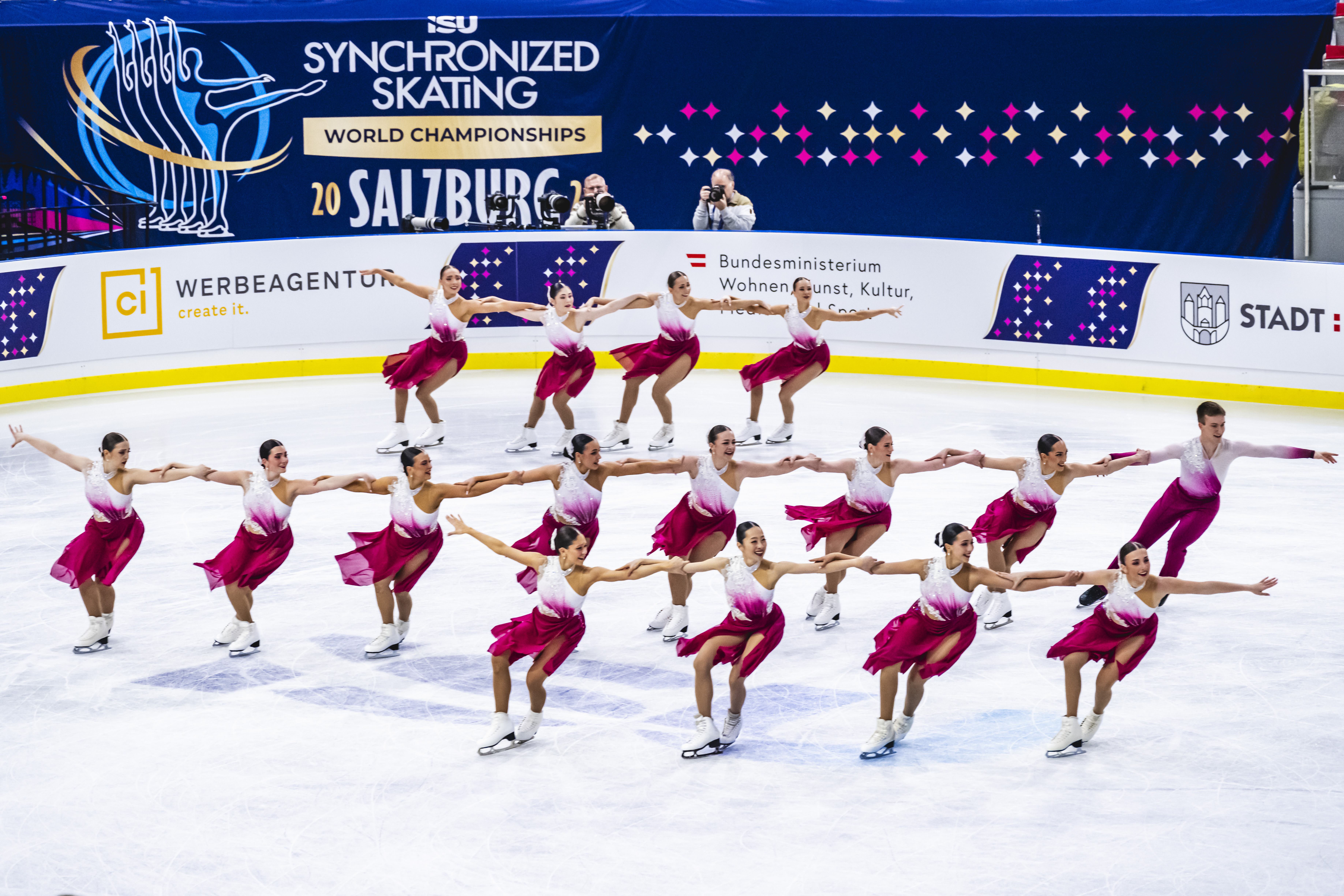
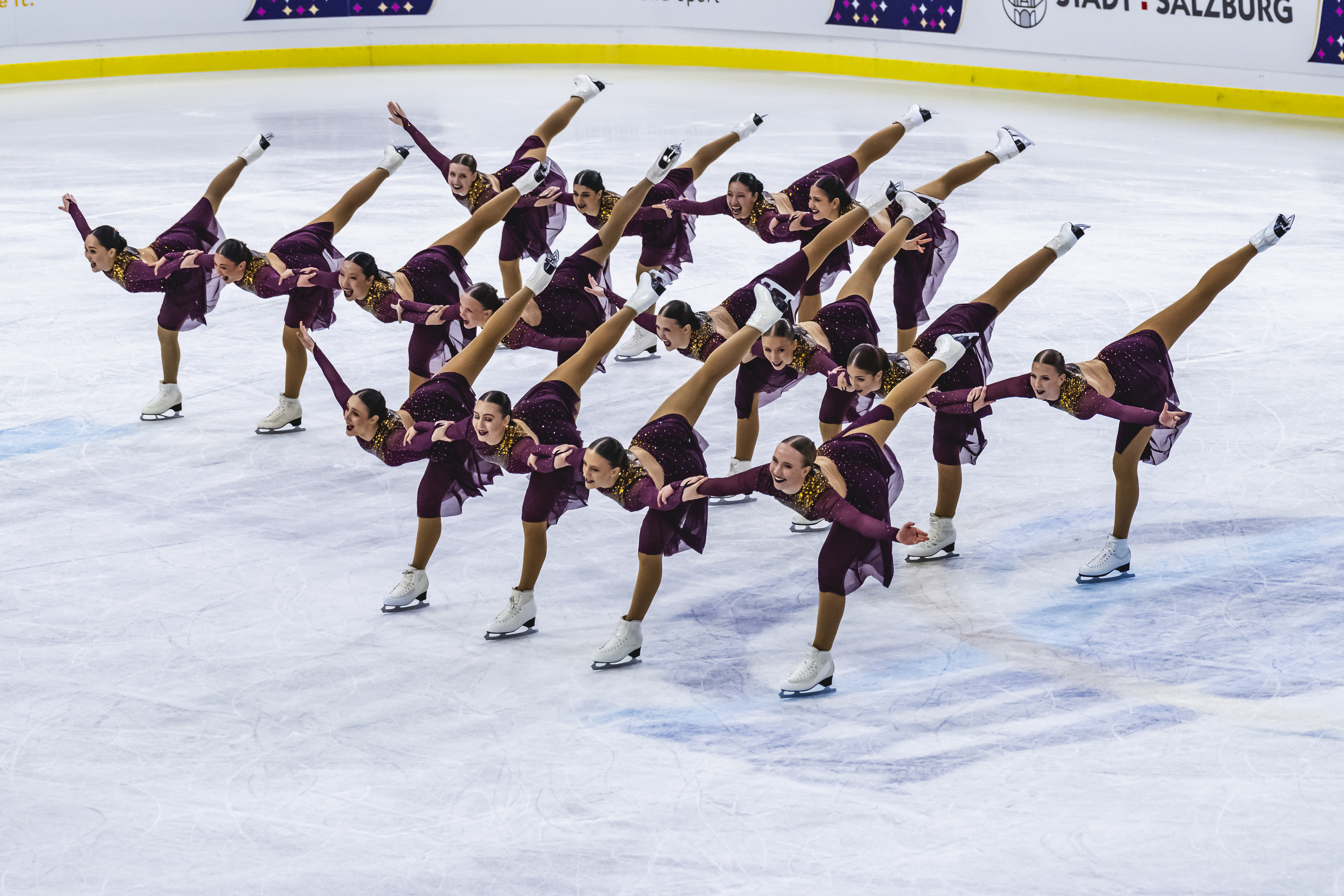
Team Les Supremes of Canada performs during the ISU Synchronized Skating World Championships 2026 in Salzburg, Austria. © ISU
Synchronized Skating Fan Guide
Watching Synchronized Skating is an experience, both in the arena and online.
- Fans cheer and clap during performances
- Teams often have strong, dedicated fan bases
- Banners, flags and coordinated support are common
- Performances are rewarded with loud applause and celebration
Why You Should Watch Synchronized Skating?
Synchronized Skating offers something unique in winter sports:
- Team sport + artistic performance
- High speed and precision
- Visually stunning formations
- Emotional storytelling on ice
With innovations like Synchro9, the sport is evolving rapidly, making it more exciting and accessible than ever before.