





SPEED SKATING
As Olympic Records tumble, the Ice Master explains
16 Feb 2026
For more information about Speed Skating in the Olympic Winter Games Milano Cortina 2026, please check here.
Six Olympic Records after eight medal events; the ice at the Olympic Winter Games Milano Cortina 2026 is faster than it's ever been. Even the 24-year-old Olympic 1000m Record set by Gerard van Velde (NED) at altitude in Salt Lake City was broken at the Olympic Winter Games Milano Cortina 2026.
"All we try to do is to give a field for all the athletes to do their best," Ice Master Mark Messer (CAN) says modestly.
Uphill battle
As unpretentious as he may be, Messer knows what he is doing. The Director of the Olympic Oval in Calgary has been responsible for the ice at six previous Olympic Games: 1988 (Calgary), 2002 (Salt Lake City), 2006 (Torino), 2010 (Vancouver), 2018 (PyeongChang) and 2022 (Beijing).
In Milan, Messer faced a new challenge. The oval at the Fiera Milano Rho exhibition center is the first temporary indoor 400m rink at the Games.
The facility was tested at the ISU Junior World Cup in November 2025, but a week before the Olympic Games, Messer's team still faced an uphill battle to get the ice in perfect condition, because conditions can vary a lot with 6,000 spectators in the tribune bringing in temperature changes and, depending on the outside weather, humidity.
"There's a lot of variables that we try to control,” Messer explains. “So the first thing is the temperature of the ice. We have different challenges here than you have in a normal building, because here we're working with thicker ice of about six centimeters.
"Then we have a temporary system for air control. If there's too much humidity in the air, the humidity starts to fall out of the air and will frost on the ice."
Knowledgeable Zamboni operators
The three main variables are ice temperature, air temperature and humidity in the hall.
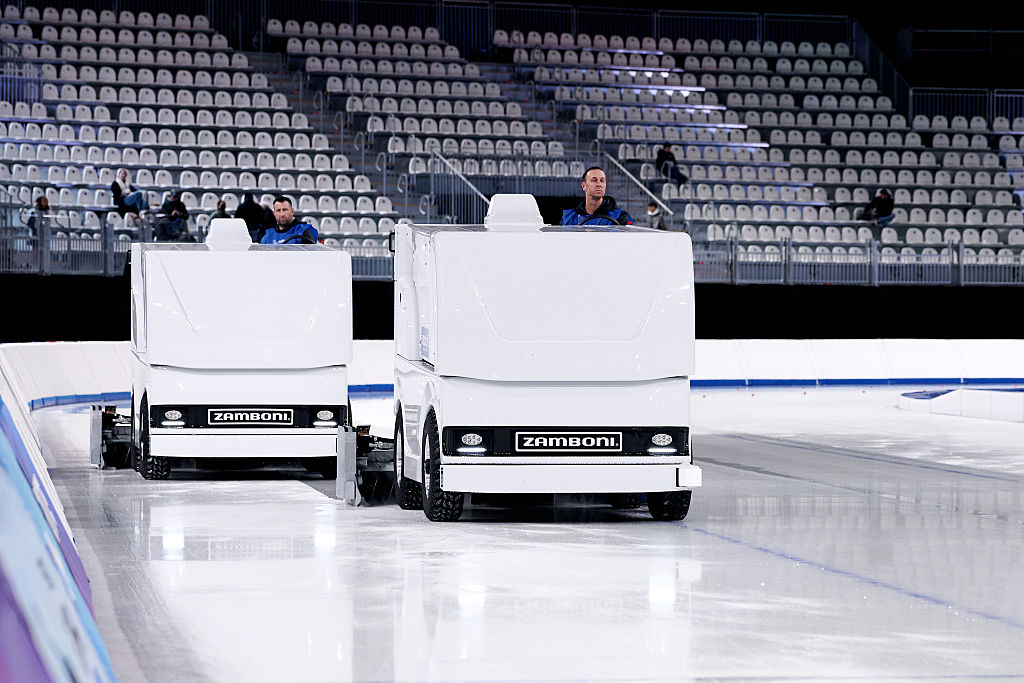 The Zamboni machine in action at the Milano Speed Skating Stadium © Getty Images
Messer added: "These are the three that we try to control during the competition. And then the last piece of the process is the resurfacing. The person running the Zamboni (resurfacing machine) has a very important role, because they can change the conditions in many ways.
"If we put down a lot of water, we can change the temperature. If we don't cut as much ice, we maybe don't get the surface that we need, so these operators need to be very knowledgeable and very experienced to be able to give up the same conditions for every skater."
Taking pride in records
Messer emphasizes that "the athletes are the story".
"I think some of the some of the records were attainable just because of the way the sport has changed.
"In four years, people have gotten faster, and everybody that's here is trying. They've been practicing for four years for this race, so they're in their best shape."
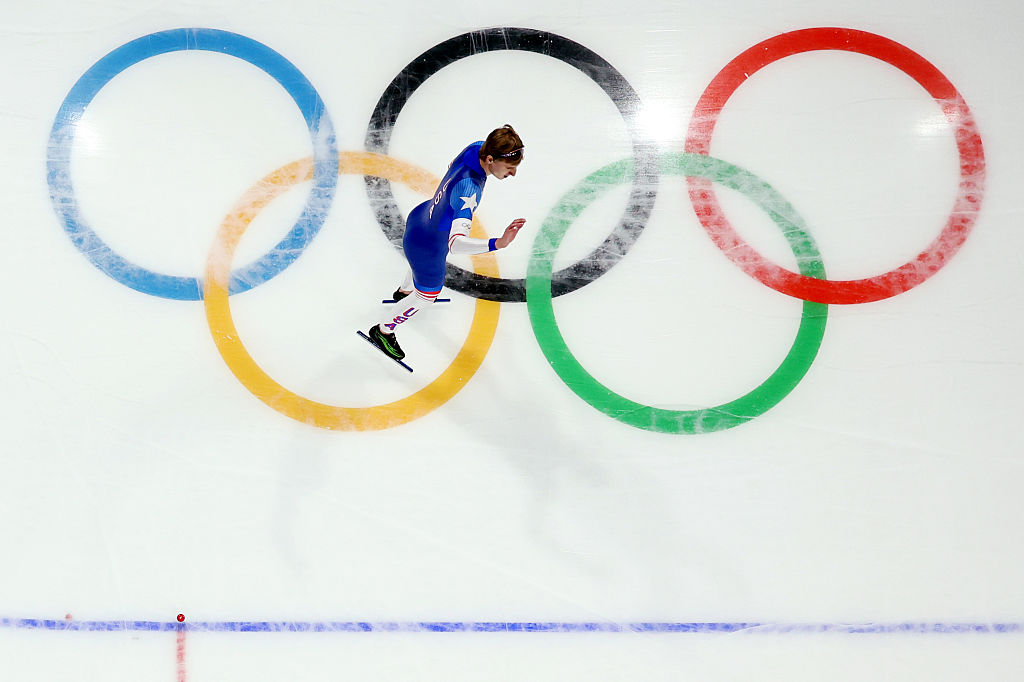
Jordan Stolz (USA) broke a 24-year-old record in the 1000m at the Olympic Winter Games Milano Cortina 2026 © Getty Images
Yet, Messer and his crew take pride in the six Olympic Records so far in Milan, especially when Jordan Stolz (USA) finally broke the 1:07.18 that Gerard van Velde set in the 1000m at the 2002 Olympic Games in Salt Lake City, with Wednesday’s time of 1:06.28.
"I was happy to see that one break finally," Messer said: "It was eluding me, because I've done so many games since, and we haven't been able to break that.
"As an ice team, we are proud every time we break a record. To see that one last so long, it's like: we got to get that."


