





SPEED SKATING
Kok smashes track record as Takagi takes first gold of the season
12 Dec 2025
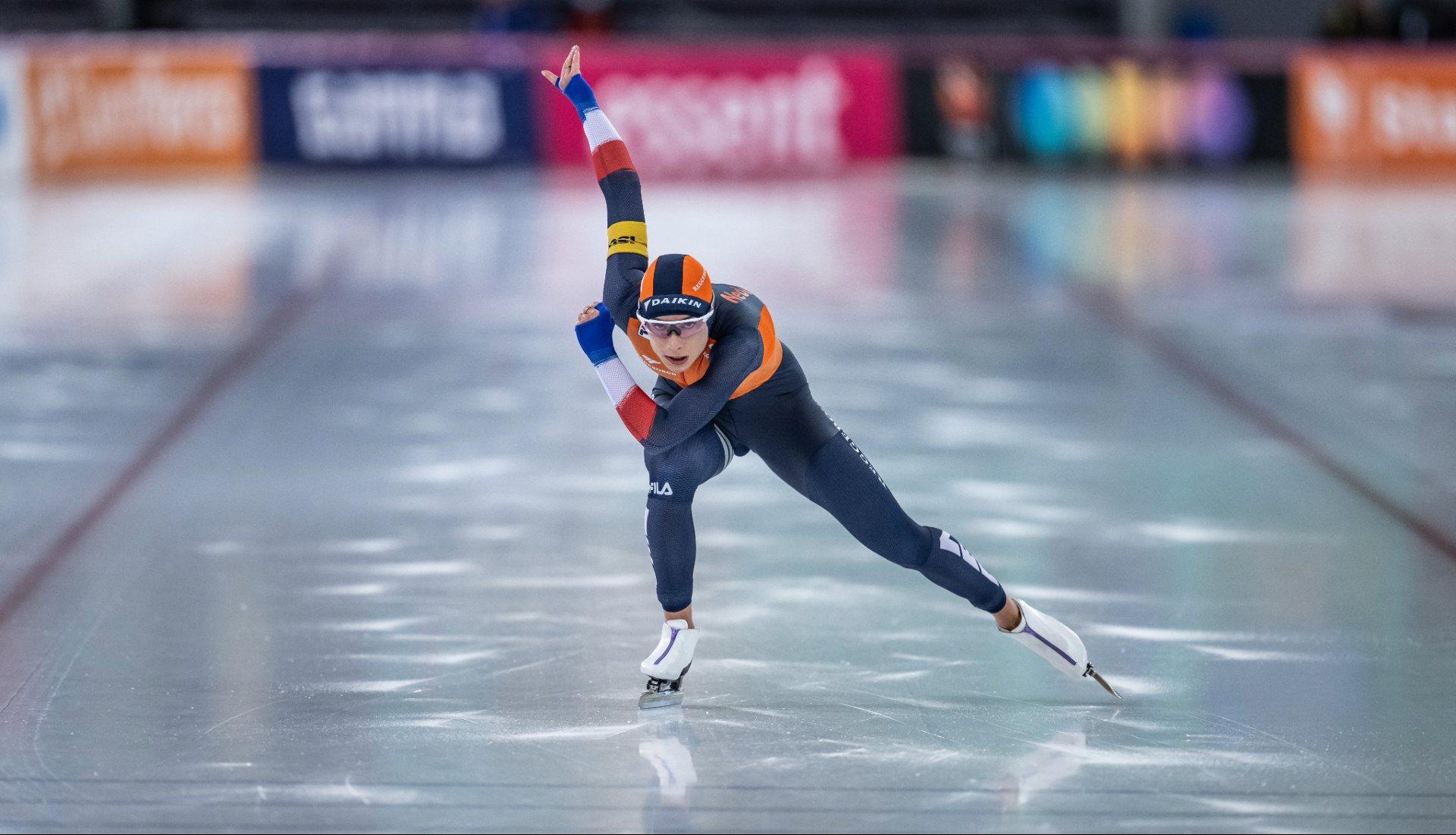
Femke Kok (NED) shattered the 500m track record at the ISU World Cup in Hamar to win her eighth consecutive World Cup race at the distance. In the 1500m, Miho Takagi (JPN) took her first World Cup gold of the season, while Nadezhda Morozova (KAZ) took her first World Cup podium in three years with silver. Home favorite Ragne Wiklund (NOR) was happy to take bronze in the distance.
Pistol problem can't rattle top gun Kok
The start of the A Division competition was delayed because of a malfunctioning starting pistol on Friday night, but it only postponed the inevitable as Femke Kok went back to doing what she’s been doing all season - winning the 500m.
Kok stopped the clock at 37.05s, breaking the Hamar track record set by Nao Kodaira (JPN) in 2019 by a 0.20s margin.
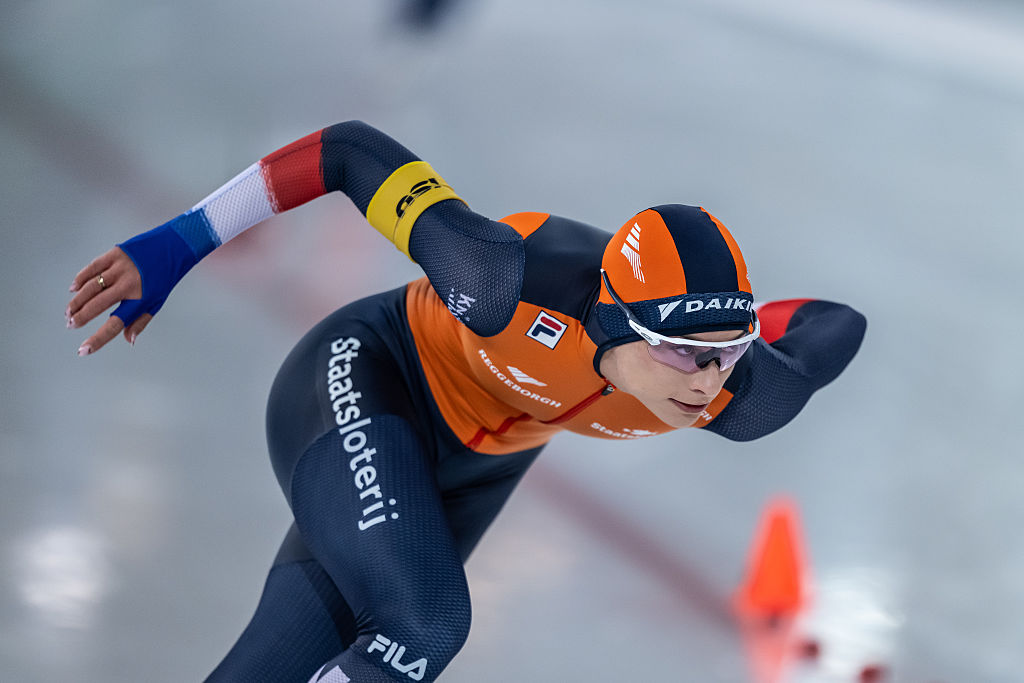
Femke Kok (NED) won her fourth 500m gold of this ISU World Cup season in Hamar and her eighth consecutive World Cup sprint overall. © ISU
The World Record holder had to do it on her own in the final pairing because the injured Erin Jackson (USA) wasn’t able to give it 100 percent.
Missing the challenge of a strong pair-mate hadn’t made the race an easy one.
“[Erin] had informed me before the race, so I knew and that makes a difference. But still, to have someone competing in the first hundred meters makes you eager, you can push each other,” Kok explained.
Kok still managed to open in 10.33s, but that was not the fastest opener in the field. Both Kaja Ziomek-Nogal (POL) and Yukino Yoshida (JPN) were faster. The Polish skater opened in 10.28s and finished in 37.65s to take silver and the Japanese sprinter opened in 10.32s and finished in 37.75s to seize bronze.
“I saw those openers,“ Kok said. “That was really fast. I trained a lot last week and arrived late in Hamar because this is not a peak-moment in the season, but I still wanted to skate a good one because it’s the last 500m race before the Olympic trials [the Dutch Olympic trials take place between Christmas and New Year’s Eve].
“I was super happy to skate a track record, because that was set by Nao [Kodaira] and that’s a super-good skater.”
With the track record, she redeemed herself for last season's 500m race at the World Championships at the same venue. Although she retained her title that day, Kok had not been happy with her performance.
“Last year, I had a pretty tough crash a day before the 500m race and I felt pain and stiffness everywhere before the start. I was gutted not to have skated a real good time, so this felt like revenge.”
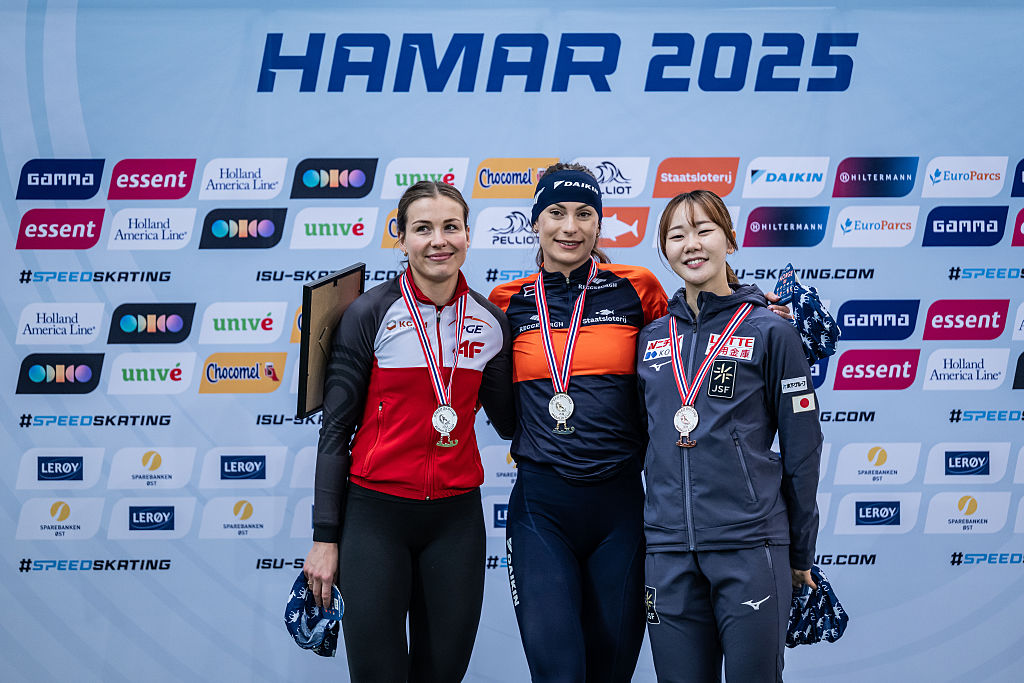
Both Kaja Ziomek-Nogal (POL, left) and Yukino Yoshida (JPN, right) enjoyed faster openers than Kok but the Dutch skater bounced back to win 500m gold yet again. © ISU
Ziomek-Nogal took her first podium finish of the season.
“It feels as a relief, because I know I was ready for it, I had really good beginning of the season in Inzell [at international training races in early October]. After that I changed my blades for longer ones,” the Polish skater said.
“I wanted the longer blades because it would give me more confidence in the corners, but it also took speed away on the last straight.”
However Ziomek-Nogal crashed with the longer blades at the Polish national championships on 23 October, and has since returned to the shorter blades.
“Now I feel like I’m finally gliding again,” she said.
Kok’s pair-mate Erin Jackson (USA) eventually finished in 43.94s, second last ahead of Suzanne Schulting (NED) who crashed in the first pairing. Jackson started despite her injury in order to protect her World Cup ranking.
“It’s kind of strange to race this way, but it’s important for the ranking, especially because it’s an Olympic year. My ranking determines my starting position at the Olympic Games,” she explained.
In collecting 22 points, Jackson climbed to third place ahead of the absent Jutta Leerdam (NED). Kok retained first place and Marrit Fledderus (NED), who finished seventh on Friday, sits in second place.
Season first for Takagi
Olympic 1000m Champion Miho Takagi (JPN) seized her first gold medal of the World Cup season in the absence of the unbeaten World Cup leader Joy Beune (NED).
Finishing in a time of 1 minute and 54.95s, the Japanese star was 0.03s faster than Nadezhda Morozova (KAZ), who collected her first World Cup medal since she won 1500m bronze on 17 December 2022 in Calgary.
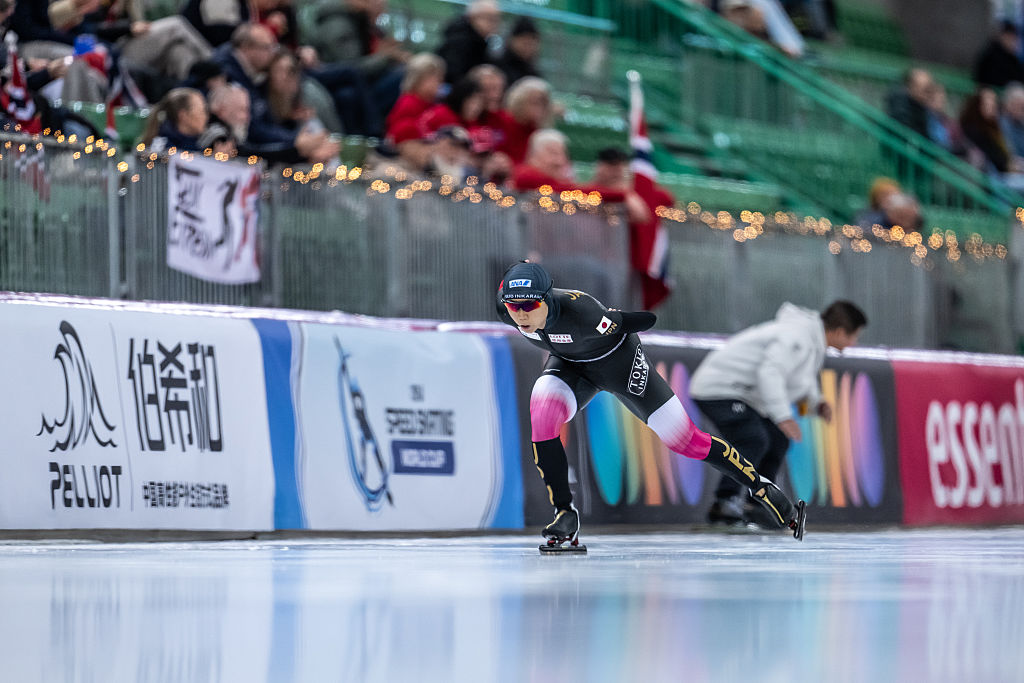
Miho Takagi (JPN) won her first gold medal of the ISU World Cup season in the 1500m. © ISU
“It’s always good to win, but this race is not good enough to become Olympic Champion. I have to improve a lot,” Takagi admitted.
“My first 700m was good, but then I couldn’t keep my speed from 700-1100m. I think it’s a technical thing. I’m happy to have my speed, however, now I also have to control it after two laps into the race.”
Only 0.23s behind Takagi, Ragne Wiklund (NOR) took bronze in 1:55.18. She was happy to be back on the somewhat slower sea-level ice in Hamar, as opposed to the fast high-altitude rinks in Salt Lake City and Calgary in November’s World Cup events.
“It’s good to be back in Hamar. This time is my personal best on this track and the margins [on the podium] are very small,” Wiklund said.
“I’m excited because I have been sick for a few days [after the World Cup in Heerenveen last weekend]. I just got back on the ice yesterday, but I just went out on the ice like I was in good shape and then I would just see how it went, and it went fine.”
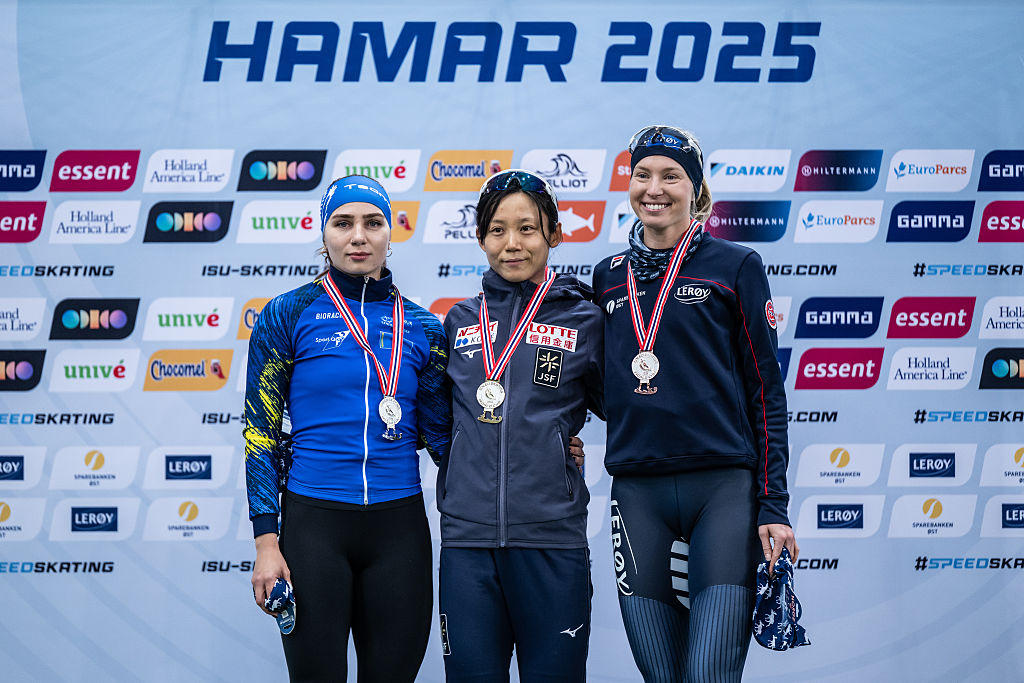
Just 0.23s separated Takagi in gold and home favorite Ragne Wiklund (NOR, right) in bronze. Nadezhda Morozova (KAZ, left) won her first World Cup medal since 2022. © ISU
Olympic qualification
The first four World Cups serve as Olympic qualification events. Speed skaters will earn quotas for their National Olympic Committees through the Special Olympic Qualification Classifications (SOQCS). Quotas will be allocated based on the SOQC Points ranking (based on points achieved at specific World Cup events) and the SOQC Times ranking (based on the best times per athlete achieved at specific World Cup events).
The maximum amount of quota places per NOC is nine skaters per gender. The quota places are determined by the SOQCS, and allocated to NOCs, not to individual skaters. There’s also a maximum amount of quota places per NOC in each distance at the Olympic Games.
For details on Olympic Qualification, click here


