





SPEED SKATING
Speed Skating and the clap skate revolution
12 Feb 2026
For more information about Speed Skating in the Olympic Winter Games Milano Cortina 2026, please check here.
Although the competition format of long track speed skating has roughly remained the same for over a century, the sport and its technology has developed in many ways since the inaugural ISU World Championships of 1893.
One of the most notable revolutions was the introduction of the clap skate in the 1990s. In the 1997/98 speed skating season, nine out of the 10 World Records in both the men's and women's events were broken thanks to the innovation.
Shortcomings of fixed skates
Dutch scientist Gerrit Jan van Ingen Schenau was the main pioneer of the clap skate in the 1980s after writing a PhD thesis on the subject in 1981. As a bio-mechanist he saw the shortcomings of the traditional skate which had the blades fixed to the shoe.
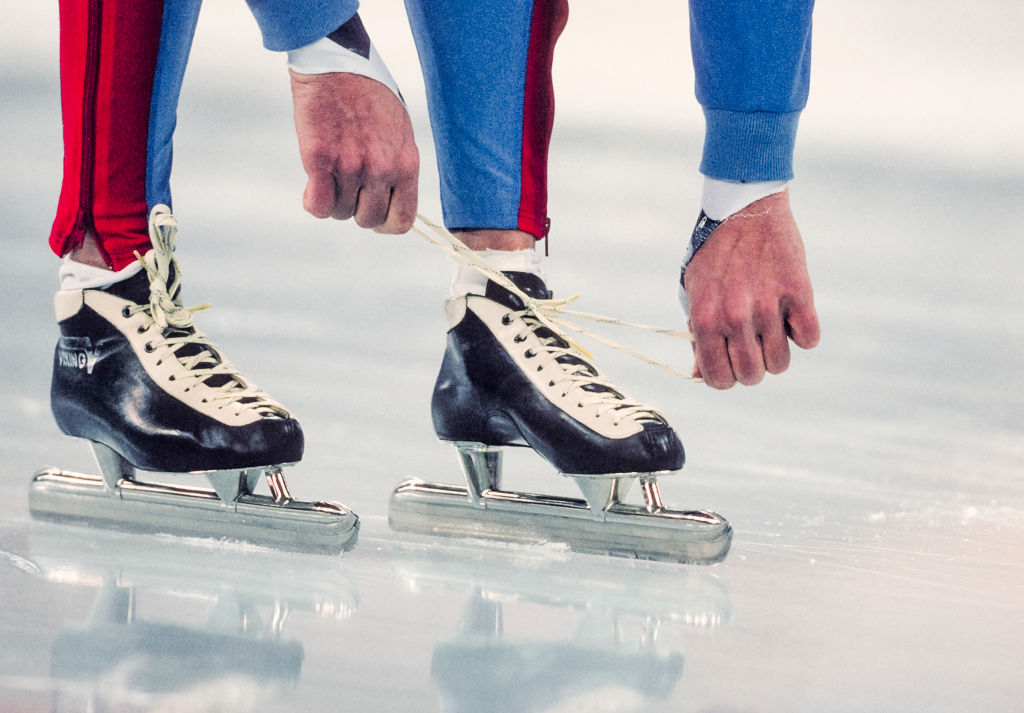 Traditional skates had the blades fixed to the shoe, restricting the athletes' ability to transfer all their power into their stride © Getty Images
He reasoned that speed skaters were not able to make use of all their available power because they were forced to remove the blade from the ice before the ankle and the knee were fully extended in order to prevent the tip from scratching the surface which would slow them down.
From the early 1980s, Van Ingen Schenau worked on a skate with a hinge and a spring at the toe to allow the skater's heel to lift in order to be able to fully extend the knee and the ankle without removing the blade from the ice.
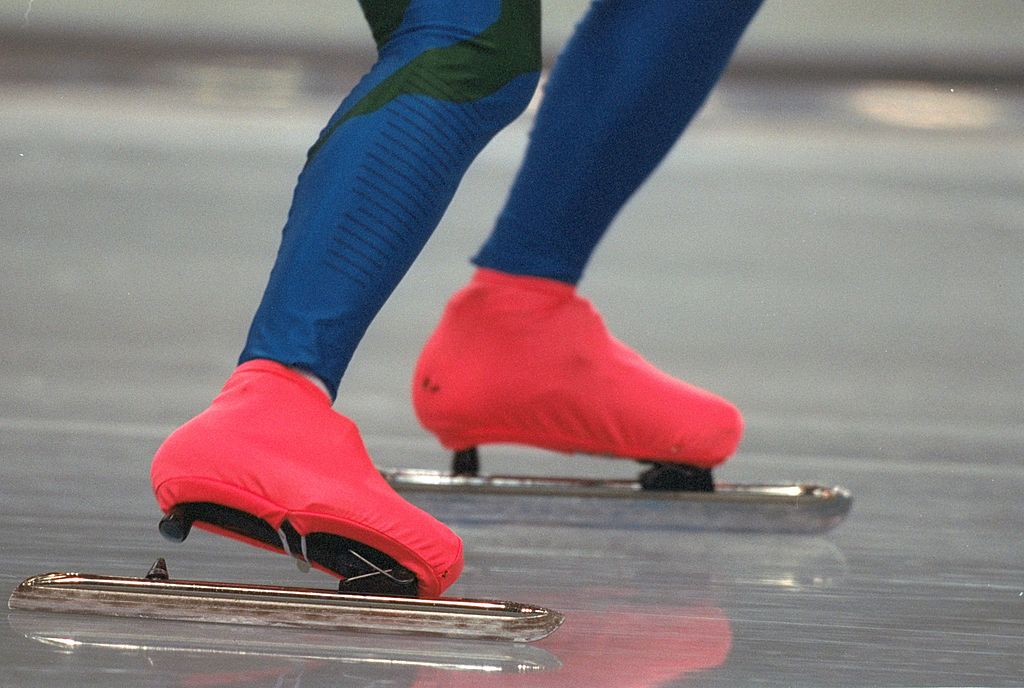 By adding a hinge and spring to the front of the skate, skaters could keep their blades on the ice for longer © Getty Images
The clap skate is named for the distinctive clapping sound the blade makes when it snaps back against the heel of the boot after a stride.
Despite initial skepticism from top Dutch skaters, he continued to refine his invention in collaboration with skating manufacturer Viking.
Tonny the trailblazer
It was only in the 1994/95 season that a group of junior skaters from the South-Holland provincial selection started using the clap skate competitively. Their exceptional improvement caught the eye of former Dutch Allround champion and Netherlands national women's coach Sijtje van der Lende, who convinced her pupils to try the innovative piece of equipment in the summer of 1996.
Tonny de Jong took on the challenge and in 1997, the 23-year-old Dutch prodigy beat seven-time champion Gunda Niemann-Stirnemann (GER) at the European Championships to become the first skater to win a major international title on clap skates.
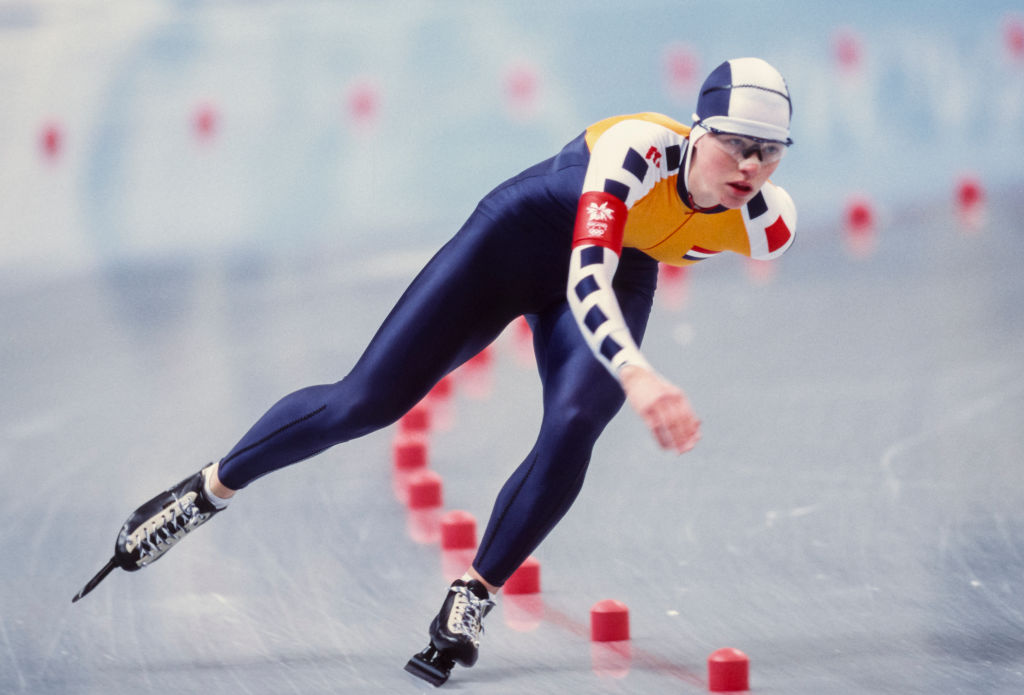 Pioneer Tonny de Jong (NED) became the first skater to win an international title using clap skates in 1997 © Getty Images
Looking back on her career in the 2021 Speed Skating anthology Langebaan, De Jong wrote: “People said it was only because of that [clap skates] that I had an advantage. But then what? It’s an athlete’s merit to embrace innovation. It’s the prize for not being afraid.”
World Record avalanche
De Jong’s victory ignited a revolution. With the 1998 Olympic Games in Nagano in sight, almost all international top skaters switched from fixed blades to clap skates over the summer of 1997.
Records started to tumble. At the start of the 1997/98 Olympic season, the men’s 1000m record was 1:11.67, set by Manabu Horii (JPN) on traditional fixed skates in 1996. Horii himself skated 1:10.63 on clap skates in November 1997, and by the end of the season Canada’s Sylvain Bouchard had broken the 70-second barrier to bring the record down to 1:09.60. That represented a two-second improvement over the course of one season, where it had previously taken 16 years, from 1980 to 1996, to wipe off two seconds from the World Record.
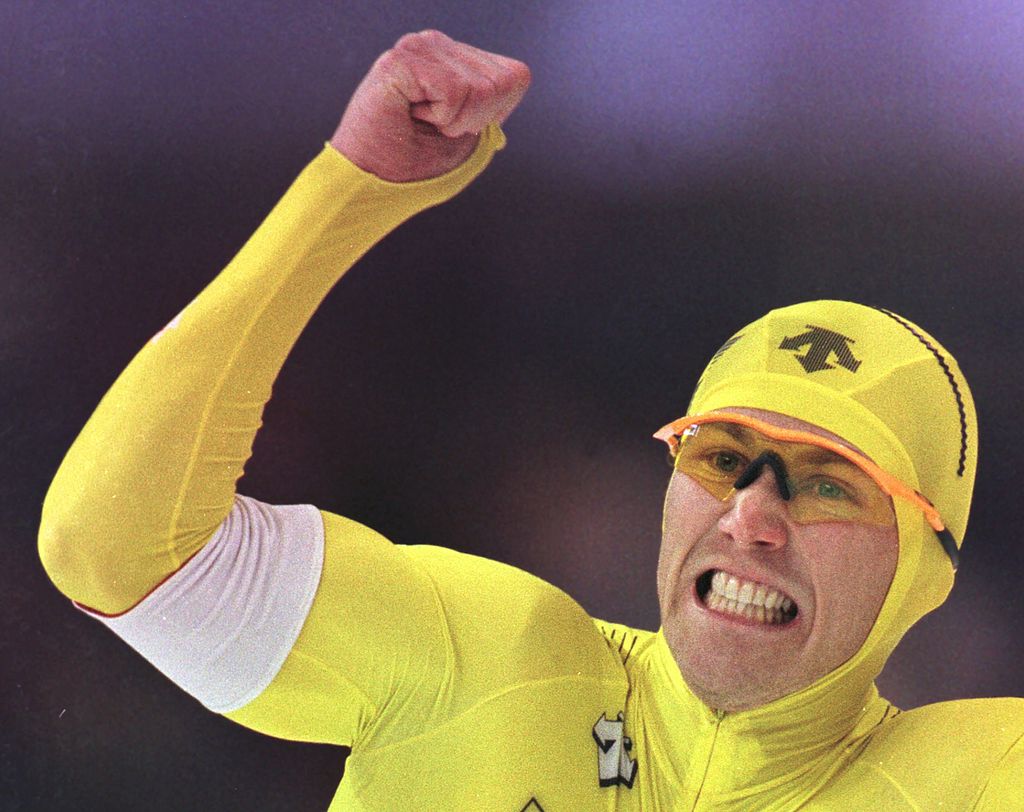 Sylvain Bouchard (CAN) went under 70 seconds for the 1000m in March 1998, marking a two-second jump in just two years © Getty Images
A level playing field
The 1997/98 avalanche of World Records confirmed what Tonny de Jong had already known from the moment she put on her first pair of clap skates: this was fast.
In 1997 De Jong had proved the entire international speed skating community wrong, but two years later she silenced the critics once more when she won her second European title in 1999. This time she defeated an entire field on clap skates.
“That was a crowning moment,” she wrote in Langebaan. “I had shown that I hadn’t been a one-hit wonder, and all the talking about the clap skate was set straight.”
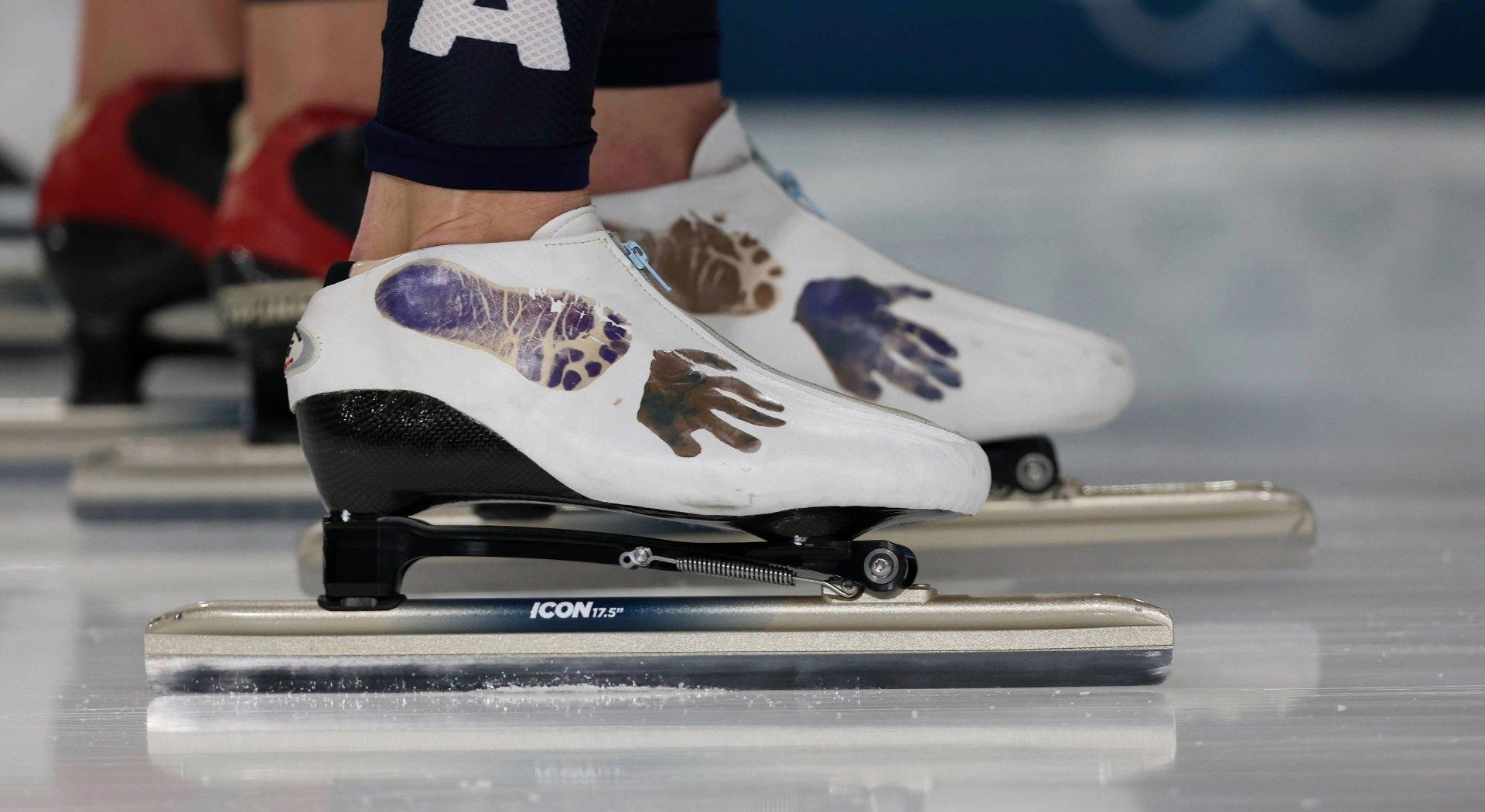
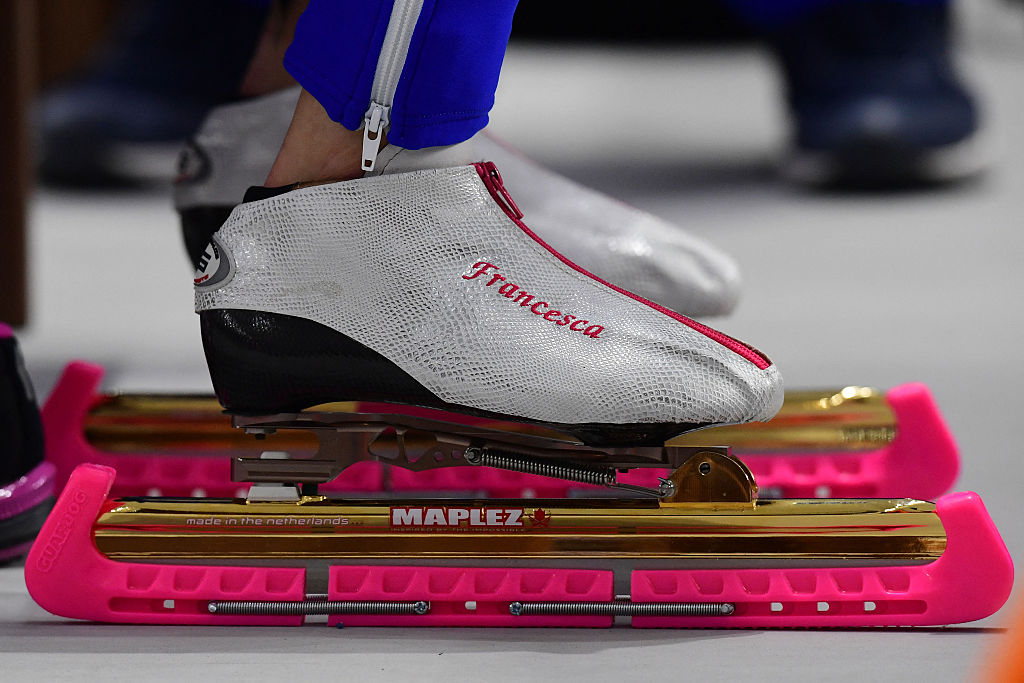 Materials have advanced but the fundamental hinge-and-spring mechanism has changed little since the introduction of the clap skate © Getty Images


