





SPEED SKATING
Team Pursuit: How the Pain Train changed the game
14 Feb 2026
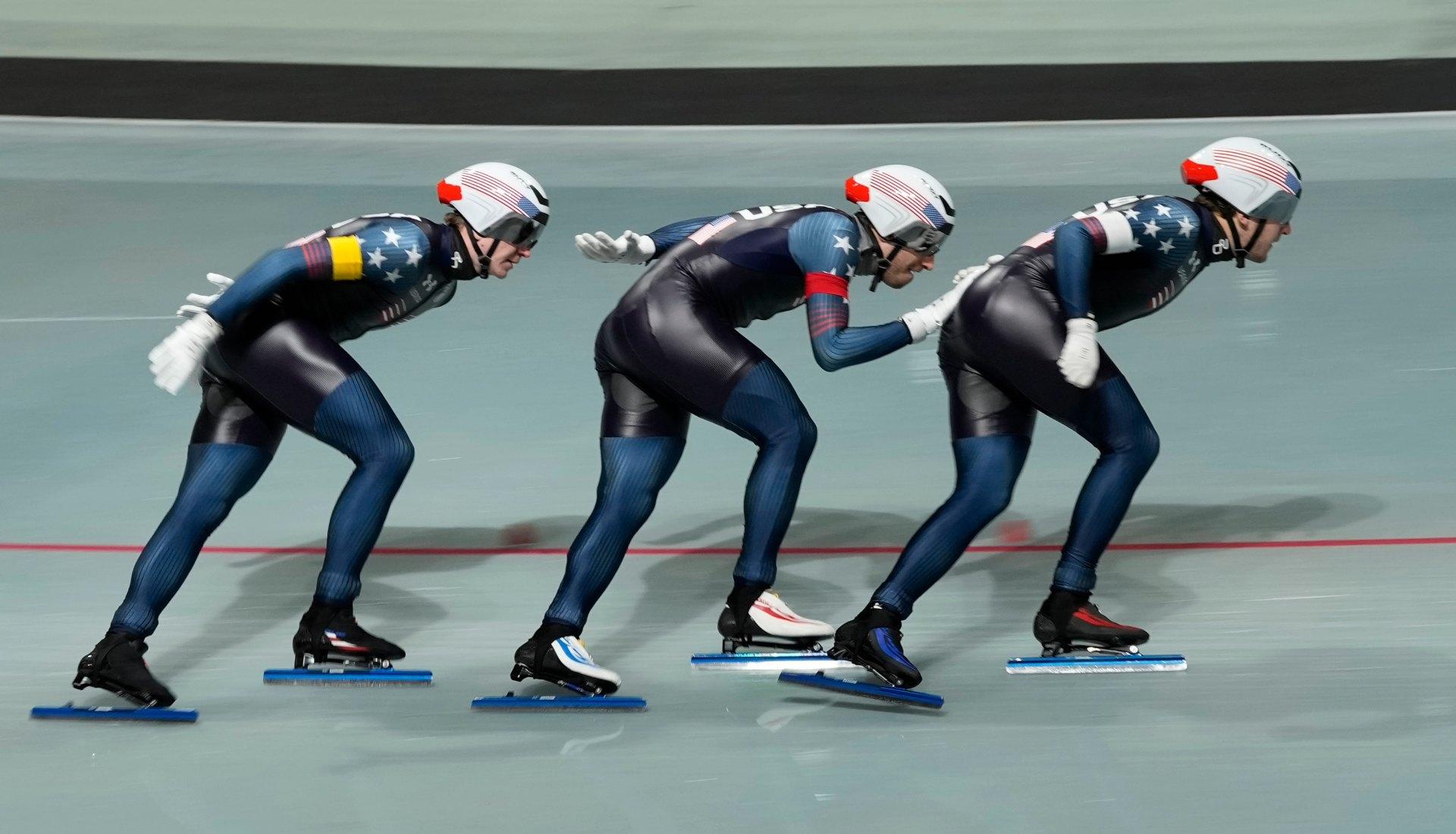
USA skaters Casey Dawson, Emery Lehman and Ethan Cepuran, pictured above, call themselves the pain train on Instagram. Having won the Team Pursuit World Cup Trophy five years in a row, they know what the event is about: eight laps of pure agony.
The only team event on the Olympic long-track program made its debut at the Games in 2006 and has come a long way since.
Redefining the draft
In Team Pursuit, the whole is more than the sum of the parts. By skating close together and making use of each other's draft to reduce aerodynamic drag, three skaters can generate more speed than an individual skater would normally be able to.
This drafting has been done in many different ways. When Italy won the first Olympic Team Pursuit on home ice at the 2006 Olympic Games in Torino they adopted tactics straight from the track cycling velodrome, where team members would typically change position to share the workload of skating up front. After about one lap or a lap-and-a-half the skater in front would give way to the second skater and rejoin the trio at the tail.
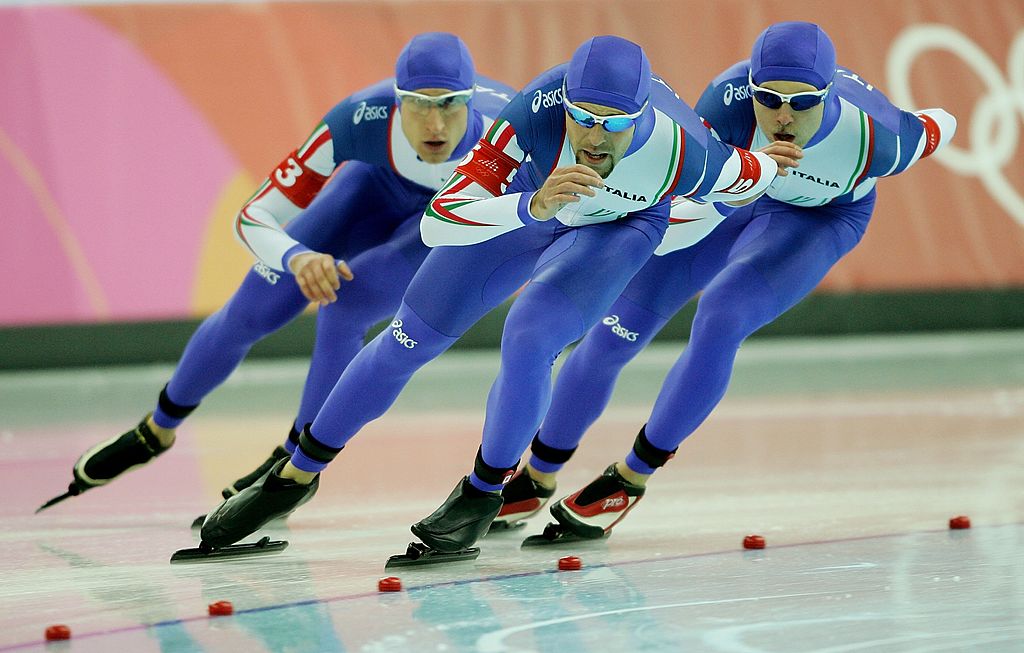 Enrico Fabris, Ippolito Sanfratello and Matteo Anesi on their way to becoming the first ever Olympic Men's Team Pursuit Champions in Turin in 2006 © Getty Images
Team USA were the first to experiment with a new strategy around 2020. Instead of changing up front, they decided to skate the full eight laps in the same order and push from the back. In this way they avoided the loss of time at change-ups and still managed to share the workload efficiently. Furthermore, for the pushing strategy it was essential to skate closer to each other, which also made the draft more efficient.
In order to execute this strategy, skaters have to skate in sync as much as possible, and so training together has become more important then ever.
The Dutch men and women dominated the Team Pursuit for a long time, with the men winning 13 out of 16 World titles since 2005 and the women eight out of 16. They simply had the fastest individual skaters, but from 2020 onwards Team USA proved that the strongest team could defeat the strongest individuals, and since the 2021/22 season have won all five World Cup Trophies in the discipline.
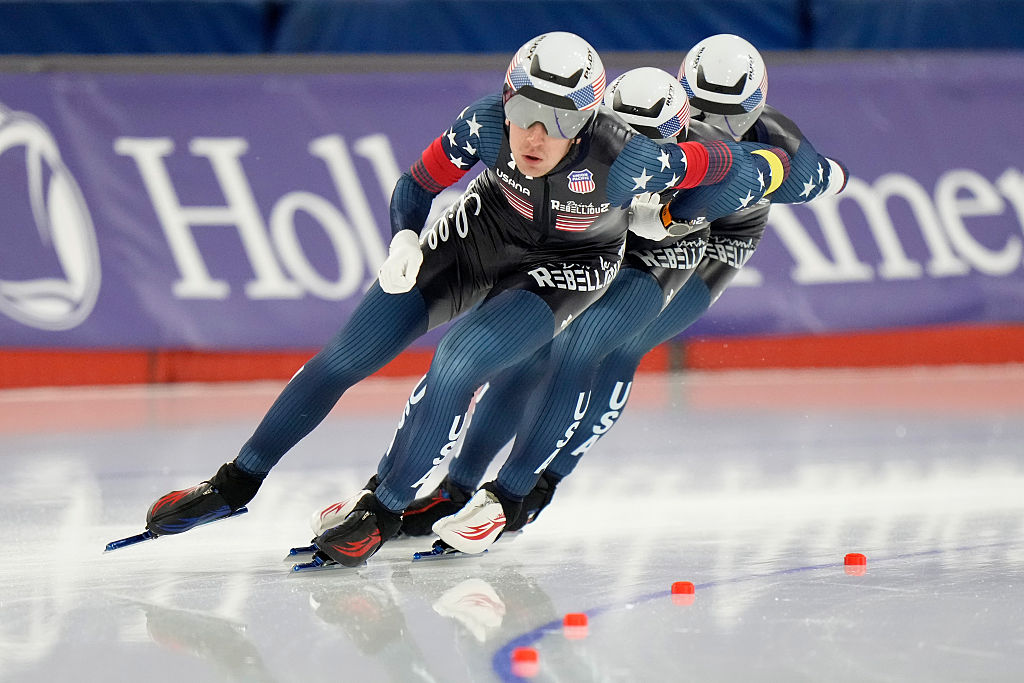 Cepuran, Dawson and Lehman have reinvented the Team Pursuit. Although other teams have copied their strategy, they remain out in front © ISU
After having secured the 2023 World Cup Trophy with teammates Dawson and Cepuran, Lehman shared the secret of their success.
"If you look at each skater individually, they're all really, really good skaters, most people would probably say: better than us three. We know we're really strong as a team,” he said.
All teams eventually copied the USA’s pushing strategy, but no team has managed to execute it quite as perfectly as the Americans have yet.
Olympic Team Pursuit format
Races are skated with three skaters in each team. The men skate a total of eight laps and the women six, and the teams compete to set the fastest time.
The teams start on opposite sides of the track and there are no separate lanes. In theory one team could close the half-lap gap to the other and perform a 'catch' before the set distance is reached, but this rarely happens and the winner is almost always decided by time.
The result of the team is determined by the time the third skater in the team crosses their team's start/finish line.
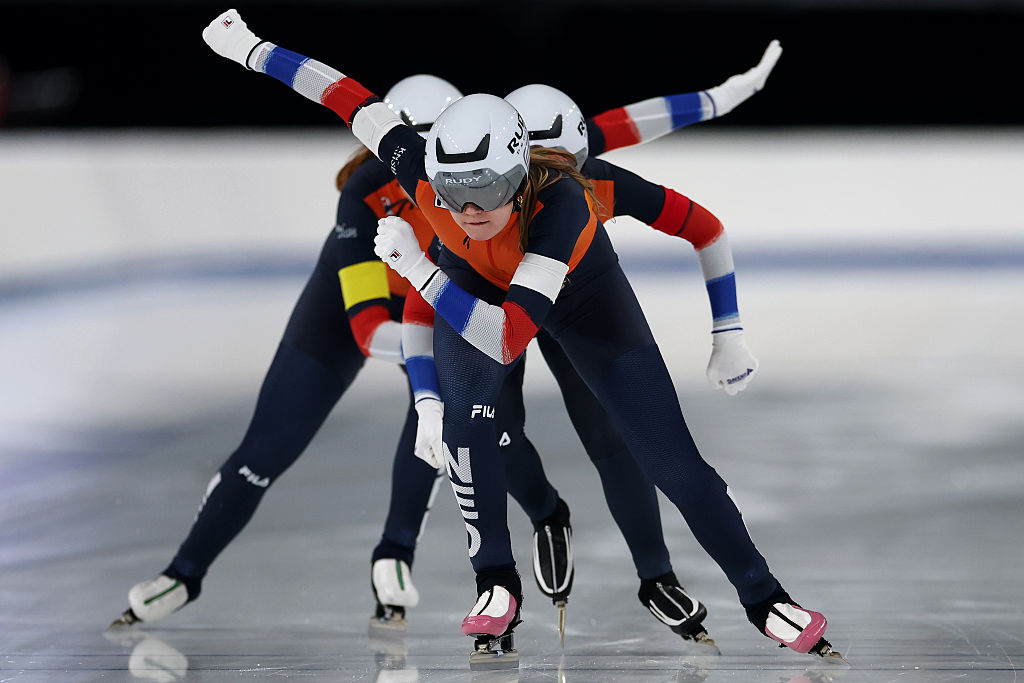 A Team Pursuit trio will act as a unit right up to the finish line, were it's the third skater to finish that stops the clock © ISU
Women's and men's team pursuit races will be skated over two days with the quarterfinals on the first day and the semifinals and finals on the second.
The four fastest teams from the quarterfinal races will advance to the semifinals, and from the semifinals onwards it's a knock-out format. The losers of the semifinals race for the bronze medal in the B final before the winners race for gold in the B final.


