





SPEED SKATING
Thialf track records tumble in men’s competition on super Saturday at ISU World Cup
06 Dec 2025
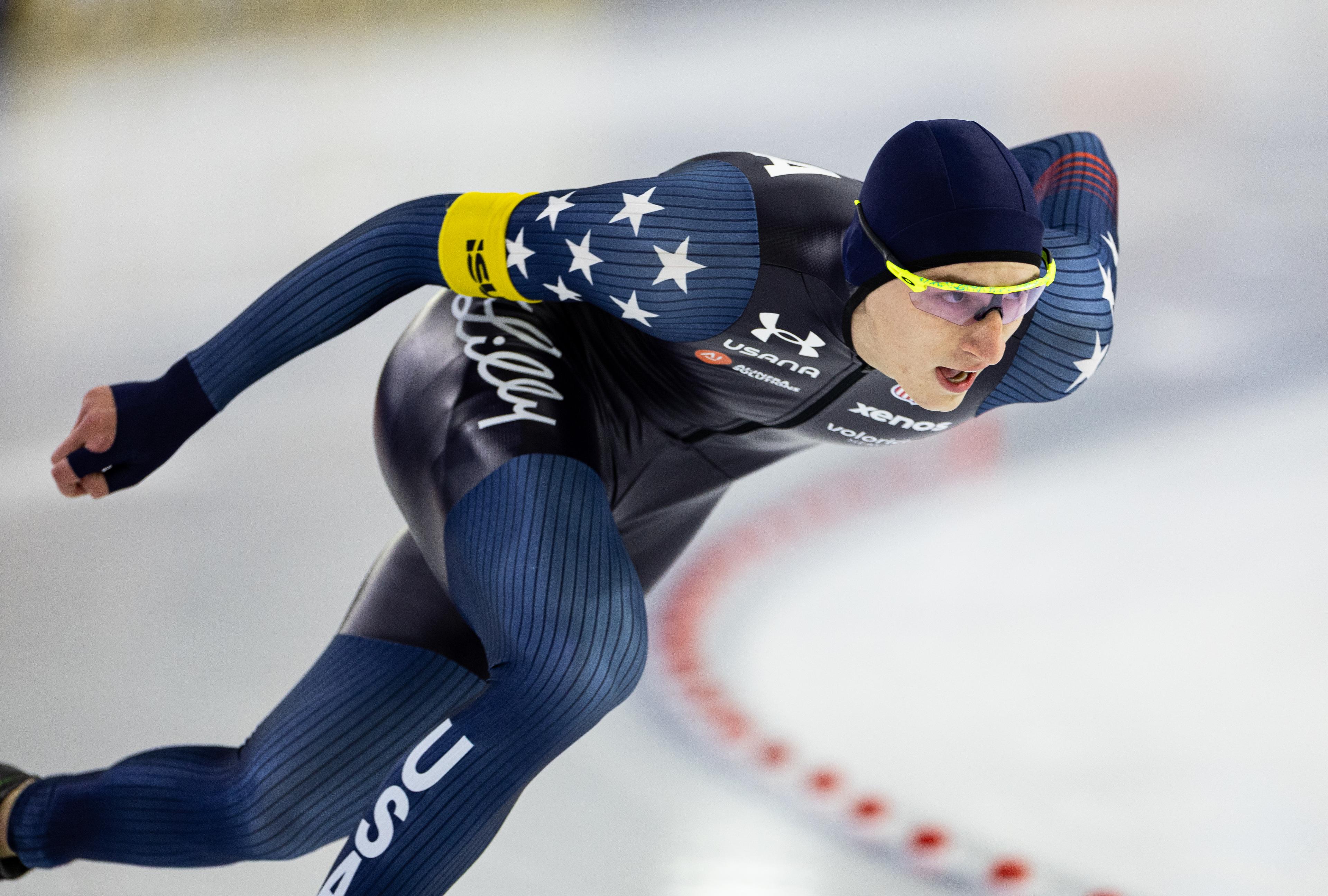
Two more track records tumbled in the men’s competition on Saturday at the ISU World Cup in Heerenveen. After Jordan Stolz already set a new track mark in the 1500m on Friday, he shattered the 1000m track record by .70s in a time of 1 minute and 6.38s.
Before Stolz’s explosion, Vladimir Semirunniy (POL) set a new rink record in the men’s 10,000m, clocking 12 minutes and 28.05s winning the B Division race. Metoděj Jílek (CZE) wins the A Division in 12:29.63.
“Absurd” time for Stolz in 1000m
The key pair in the men’s 1000m on Saturday featured World Cup leader Stolz versus second-ranked Jenning de Boo (NED), who held the Thialf track record with a time of 1:07.08.
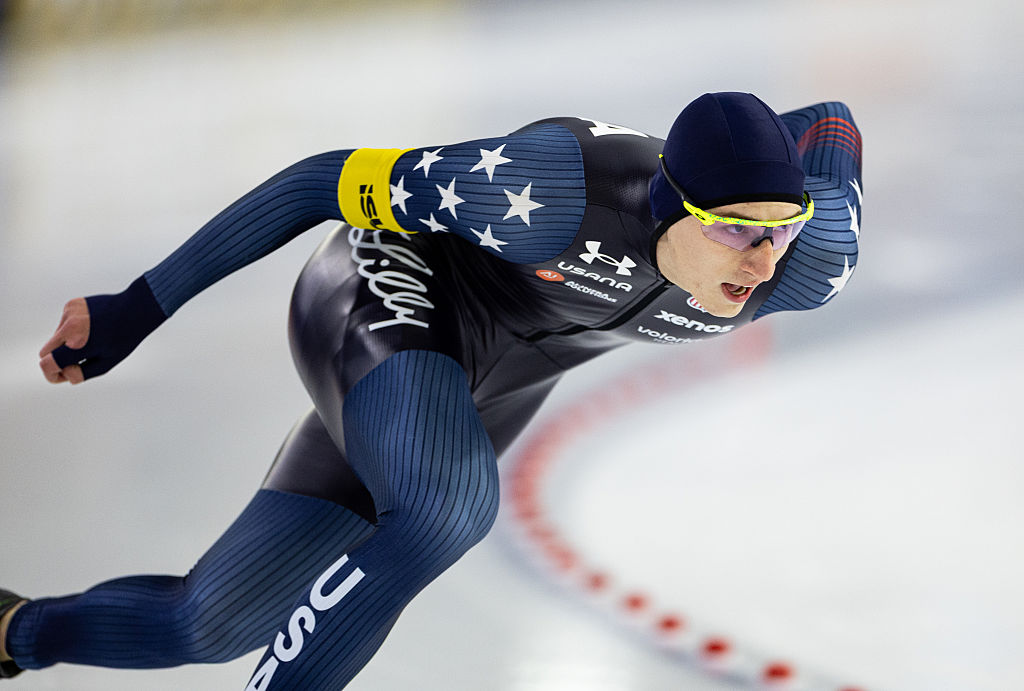 Jordan Stolz (USA) wins the 1000m at the ISU World Cup Speed Skating at Thialf Ice Stadium in Heerenveen, Netherlands © ISU
The much anticipated battle quickly turned into a master class. Starting from the outside lane, Stolz sped past De Boo in the inner lane after the first backstretch, leaving the Dutchman standing.
“What he did today is absurd,” De Boo commented. “I was aiming at 1:06 something myself today, but 1:06.3, I hadn’t seen that coming.”
De Boo himself clocked 1:07.60 to take fourth place.
Stolz hadn’t seen his super speed of 1:06.3 coming either.
“(Crossing the finish line) I looked up expecting 1:06.90, but the scoreboard said 1:06.38. I couldn’t believe it! It’s super nice to skate a track record here, and of course 1:06.3 is crazy.
“The feeling was so good. I go out there and do it and don’t even think about it.”
The race had been near perfect, Stolz said: “I just don’t know what I would change about it.”
Junior track record for Sonnekalb
Finn Sonnekalb (GER) took 1000m silver in a Junior Track Record of 1:07.42.
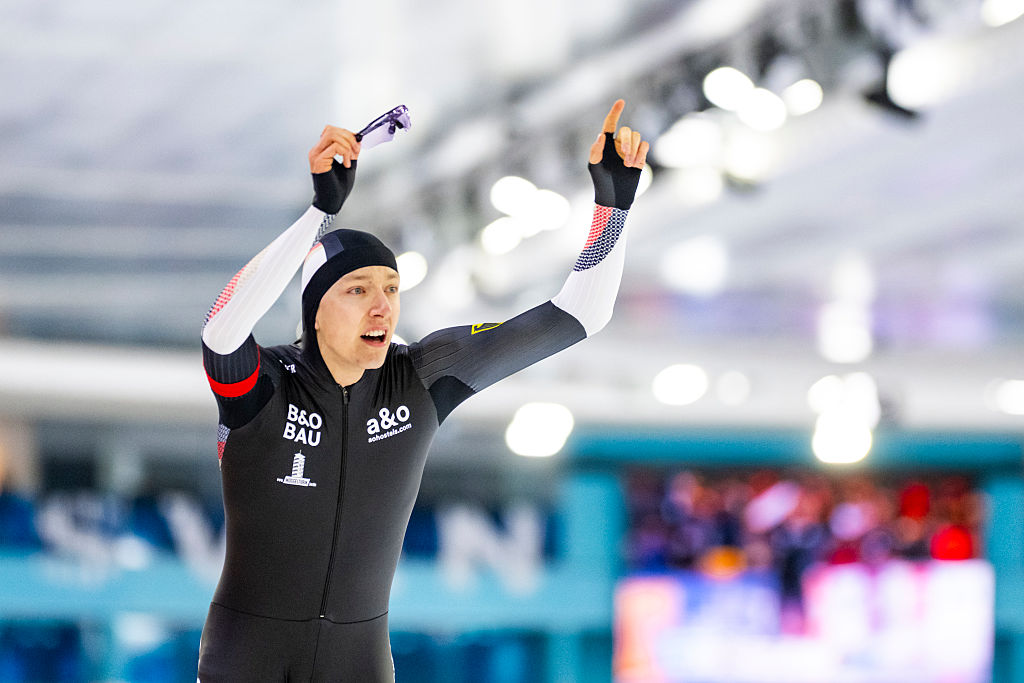 Finn Sonnekalb (GER) takes silver in the 1000m at the ISU World Cup Speed Skating at Thialf Ice Stadium in Heerenveen, Netherlands © ISU
After a rough summer, the 18-year-old German had not expected to be able to compete with the best in his first season at senior level.
“It was a hard summer for me. I had a lot of problems with my knee and my back. I didn’t expect to be where I am at right now.”
To be able to compete with the very best in the world, does not change his approach, however.
“Now, I know what I can do. And we will see what I can do at the (Olympic) Games. I just focus now, I’m not going to put any pressure on it.”
Behind Stolz and Sonnekalb, Dutch prodigy Tim Prins (NED) had his first podium finish this season with 1:07.49 in third place.
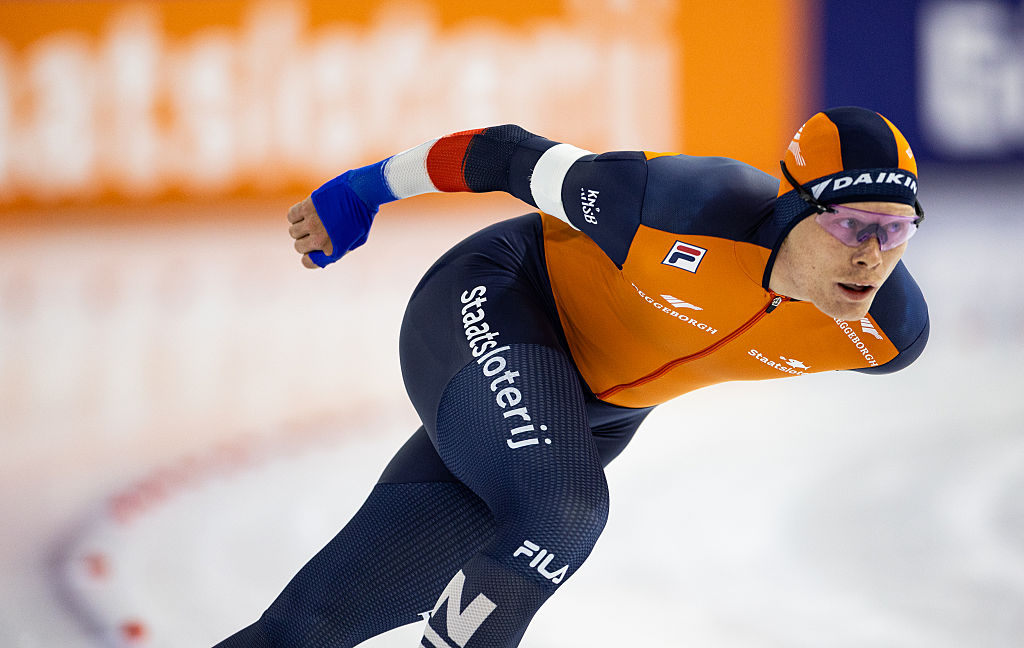 Tim Prins (NED) takes bronze in the 1000m at the ISU World Cup Speed Skating at Thialf Ice Stadium in Heerenveen, Netherlands © ISU
“In the end I’m just content with a very good race," said Prins. "I’m very happy to finish on the podium, albeit at a second from the winner, but that’s just a completely different level. I’m happy with a solid race, without any mistakes."
Jilek takes gold, a track record for Semirunniy
Metoděj Jílek (CZE) won the 10,000m in 12:29.63, but he did not skate the fastest time of the day. Earlier on Saturday morning, Vladimir Semirunniy (POL) had already broken the track record in 12:28.05.
The previous track mark of 12:32.95, which Nils van der Poel (SWE) set in 2021, was a World Record at the time.
For Semirunniy, who was previously too low on the long distance World Cup ranking to claim a spot at the Olympic Games in Milano Cortina, the blistering Thialf 10,000m was important. He now takes one of the three quota places, based on time, on the 10,000m Special Olympic Qualification Classification.
In the A Division, Jilek had tried to attack Semirunniy’s time, but eventually came 1.58s short. Davide Ghiotto (ITA) finished second in 12:33.37 and Timothy Loubineaud (FRA) third in 12:36.61.
Jilek skated affer Ghiotto had set his mark.
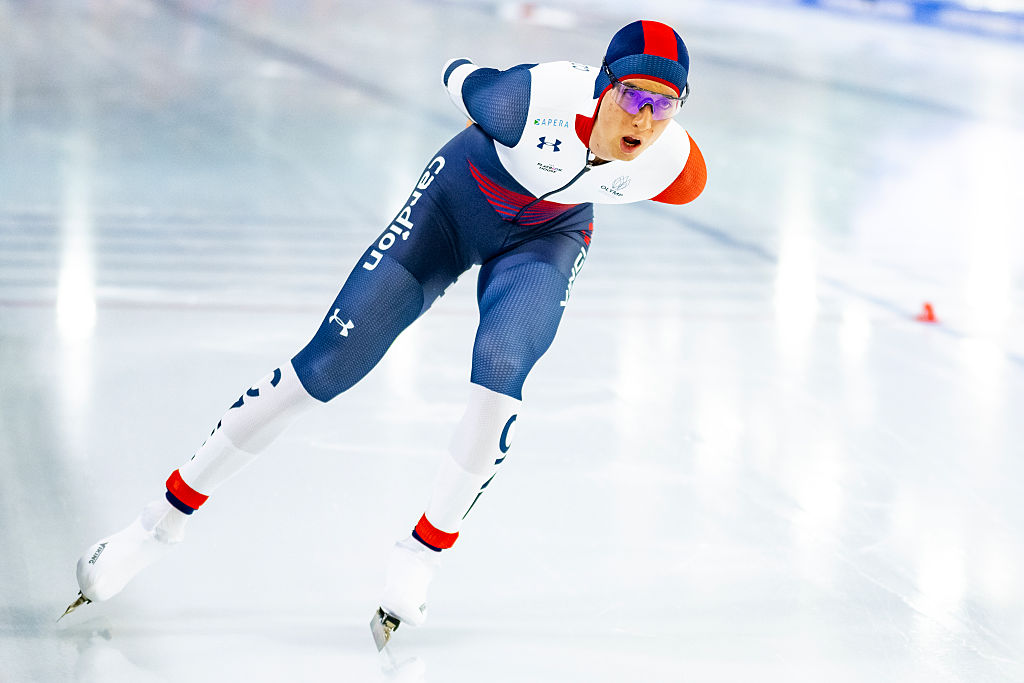 Metodej Jilek (CZE) in the 10,000m at the ISU World Cup Speed Skating at Thialf Ice Stadium in Heerenveen, Netherlands © ISU
The Czech youngster said: “I was trying to go for the first place. Then I saw what Davide Ghiotto (ITA) did and I was trying to go for that time. My plan was to start a little bit slower, but I felt really good during the race, so I brought it down pretty fast, and I held it.”
The quartet starts in the B Division, instead of pairs. Comparing his time with Semirunniy’s, Jilek said:
“Everyone knows that quartets are a little bit faster than the pairs, because of the wind.
“Personally, I don't mind much for the track record, but a win is a win, and I won in the A Division, so that's all that matters right now.”
Olympic qualification
The first four World Cups serve as Olympic qualification events. Speed skaters will earn quotas for their National Olympic Committees through the Special Olympic Qualification Classifications (SOQCS). Quotas will be allocated based on the SOQC Points ranking (based on points achieved at specific World Cup events) and the SOQC Times ranking (based on the best times per athlete achieved at specific World Cup events).
The maximum amount of quota places per NOC is nine skaters per gender. The quota places are determined by the SOQCS, and allocated to NOCs, not to individual skaters. There’s also a maximum amount of quota places per NOC in each distance at the Olympic Games.
For details of Olympic Qualification, click here


