

SYNCHRONIZED SKATING
From an Idea to an Olympic Sport: The Incredible Evolution of Synchronized Skating
28 Aug 2026
What began as an experiment during ice hockey intermissions in 1950s Michigan has grown into a global discipline practised by thousands of skaters around the world.
Now, seven decades after its first team took to the ice, Synchronized Skating is preparing for its biggest moment yet. Synchro9, its dynamic new nine-skater format, will make its Olympic debut at the Olympic Winter Games Alpes 2030 after first appearing at the Winter Youth Olympic Games Dolomiti Valtellina 2028.
This is how an idea became a worldwide sport and found its way to the Olympic stage.
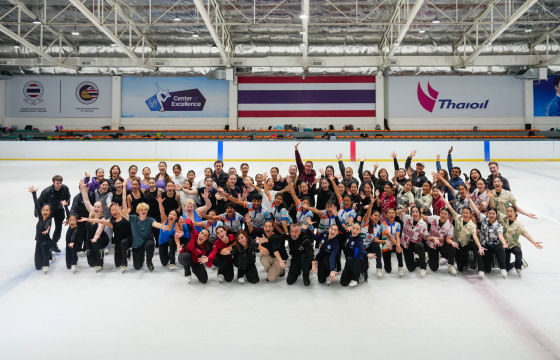
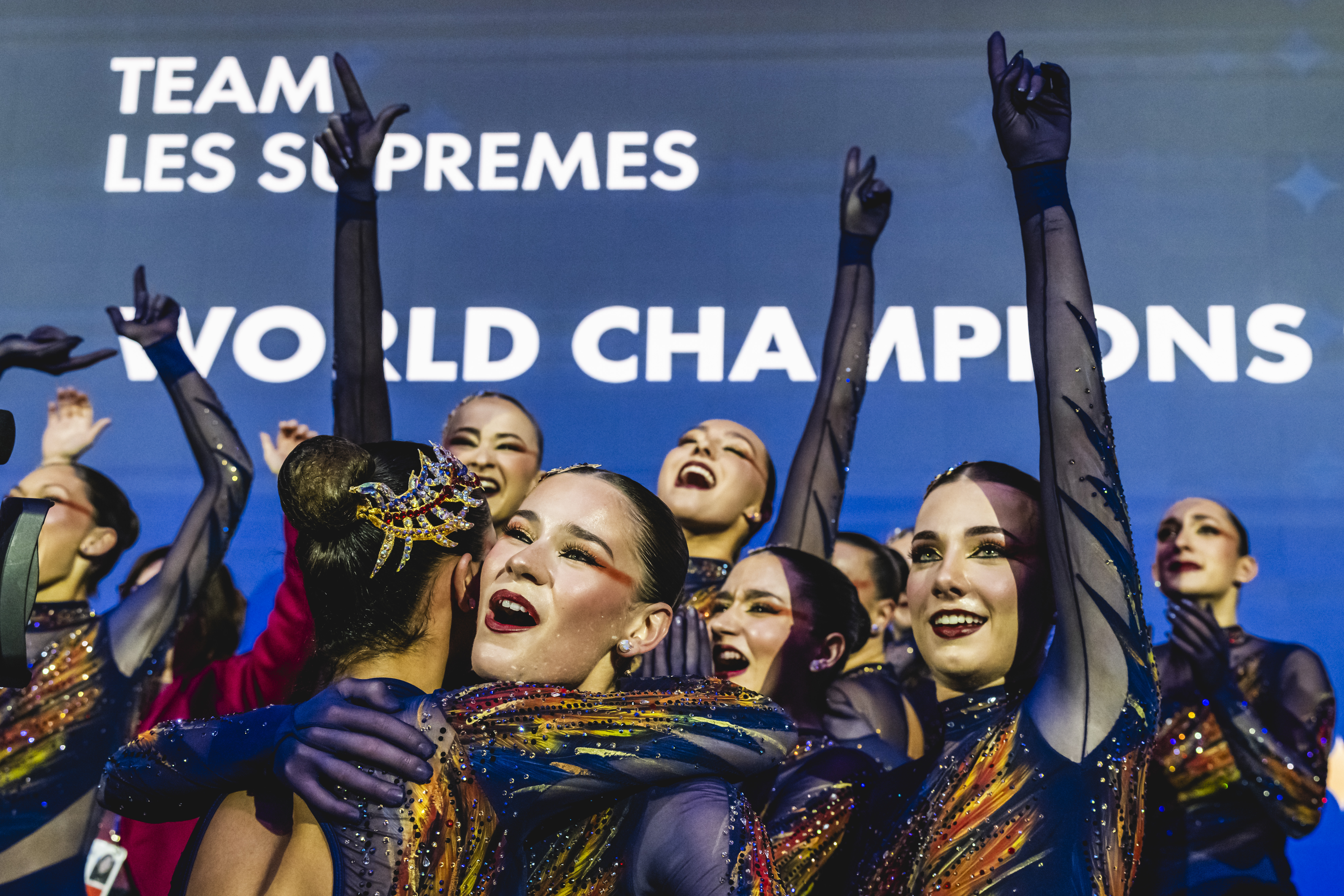 Team Les Supremes of Canada react after realising they've won gold medal at the ISU Synchronized Skating World Championships 2026 in Salzburg, Austria.© ISU
The birth of Synchronized Skating
The story began in 1956, when Richard Porter brought together a team of so-called “chorus skaters” to perform at the Ann Arbor Figure Skating Club in Michigan, USA.
“Everyone loves a skating chorus,” Porter wrote in 1961 in the magazine of U.S. Figure Skating. “The Ann Arbor FSC has discovered that chorus work can be an enjoyable adjunct to the standard trio of figures, free skating and dance.”
Named the Hockettes, the team featured 24 skaters and performed during intermissions at ice hockey games. Porter wondered in his article “if competition between chorus groups might be worthwhile”.
It was. What started as a fun idea soon gained momentum.
From precision skating to a global discipline
Originally known as Precision Skating, the new discipline began to grow, first in the USA and then in other countries around the world.
Teams, which originally consisted of 24 skaters, began competing against one another. The first international competition was held in Sweden in 1989, and the ISU officially recognised Synchronized Skating as a discipline of figure skating at the 45th ISU Congress in 1994.
Synchronized Skating had found its place in the skating family, but the discipline was only getting started.
“Synchronized Skating has developed enormously; the technical skills required for each skater have increased significantly and in general the sport has gained a lot more difficulty, speed, power and creativity,” said Ida Hellström, an ISU Synchronized Skating World Champion with Finnish team Marigold Ice Unity.
“The overall quality of skating skills, precision and unison has also improved remarkably,” added Nina Bischoff, a former competitive synchronized skater from Switzerland and now Chair of the ISU Synchronized Skating Technical Committee.
“Today’s programs combine exceptional athletic performance with artistry, making synchronized skating one of the most demanding disciplines within figure skating,” she continued.
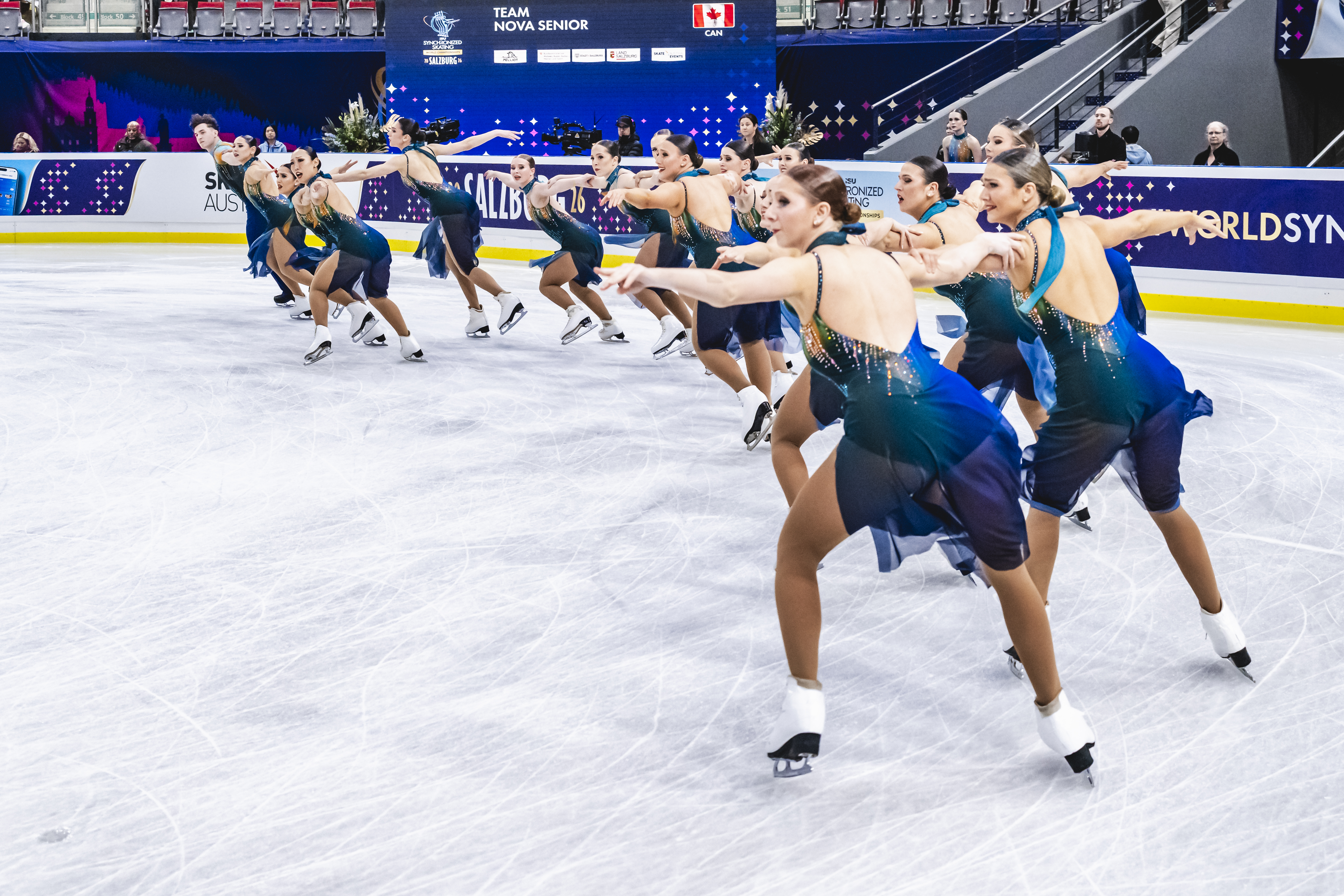
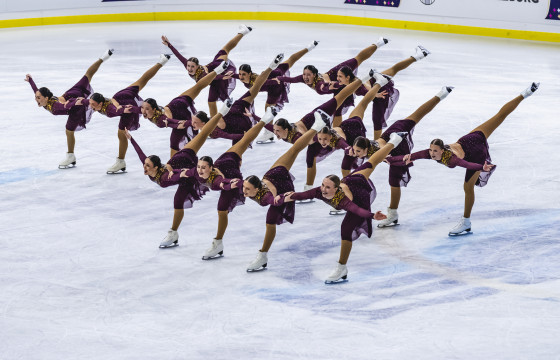
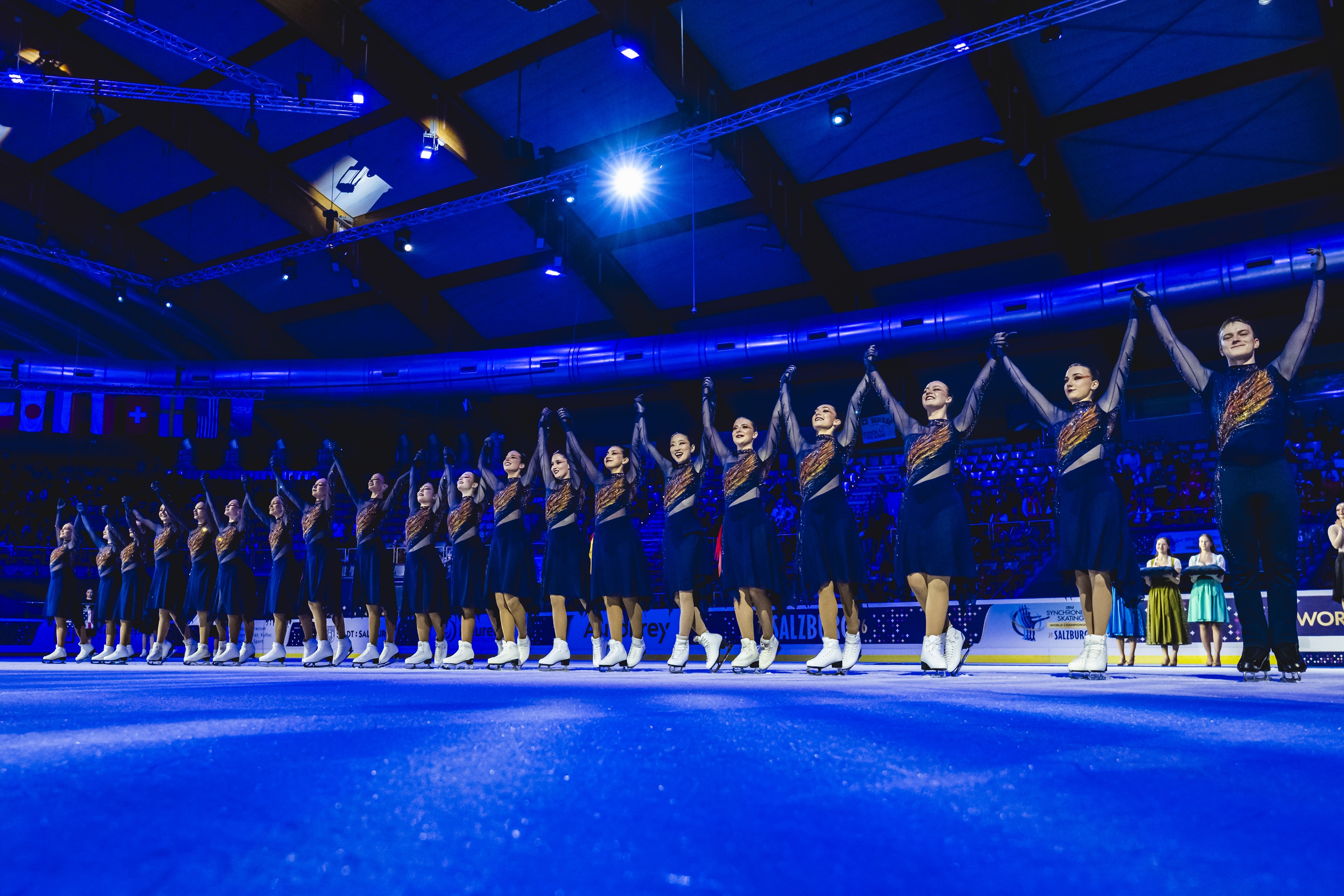
Team Nova Senior performs at the ISU Synchronized Skating World Championships 2026 in Salzburg, Austria.© ISU
A sport spreading around the world
The growth of Synchronized Skating can now be seen across the globe.
A total of 22 teams from 17 countries, featuring 445 athletes, participated in the ISU Synchronized Skating World Championships 2026 in Salzburg, Austria. The ISU Synchronized Skating Junior World Championships 2026 in Gdansk, Poland, featured 26 teams representing 21 countries.
“The strong competition between more and more countries pushes the teams to go further and further each season,” Hellström, who is now a member of the ISU Synchronized Skating Technical Committee, noted.
“This competition also encourages teams to develop innovations and creative solutions for performing their programs. The discipline has become more professional in the last 20 years, year by year, and I think there is still a lot more room for development in that area.”
Bischoff agreed: “This development has also been supported by advances in coaching, off-ice training, sports science and choreography. Teams today prepare at a much more professional level than they did 20 years ago, both physically and mentally.”
Growing competition, innovative coaching and the continuous development of the ISU Judging System and rules have all helped the discipline evolve.
“In addition, more and more Skaters skate the majority or even whole career in synchro which also helps them specialize in the discipline early, leading to more synchro abilities,” Hellström pointed out.
“International collaboration and the exchange of knowledge between coaches, officials and Member Federations have further accelerated the development of Synchronized Skating worldwide,” Bischoff added.
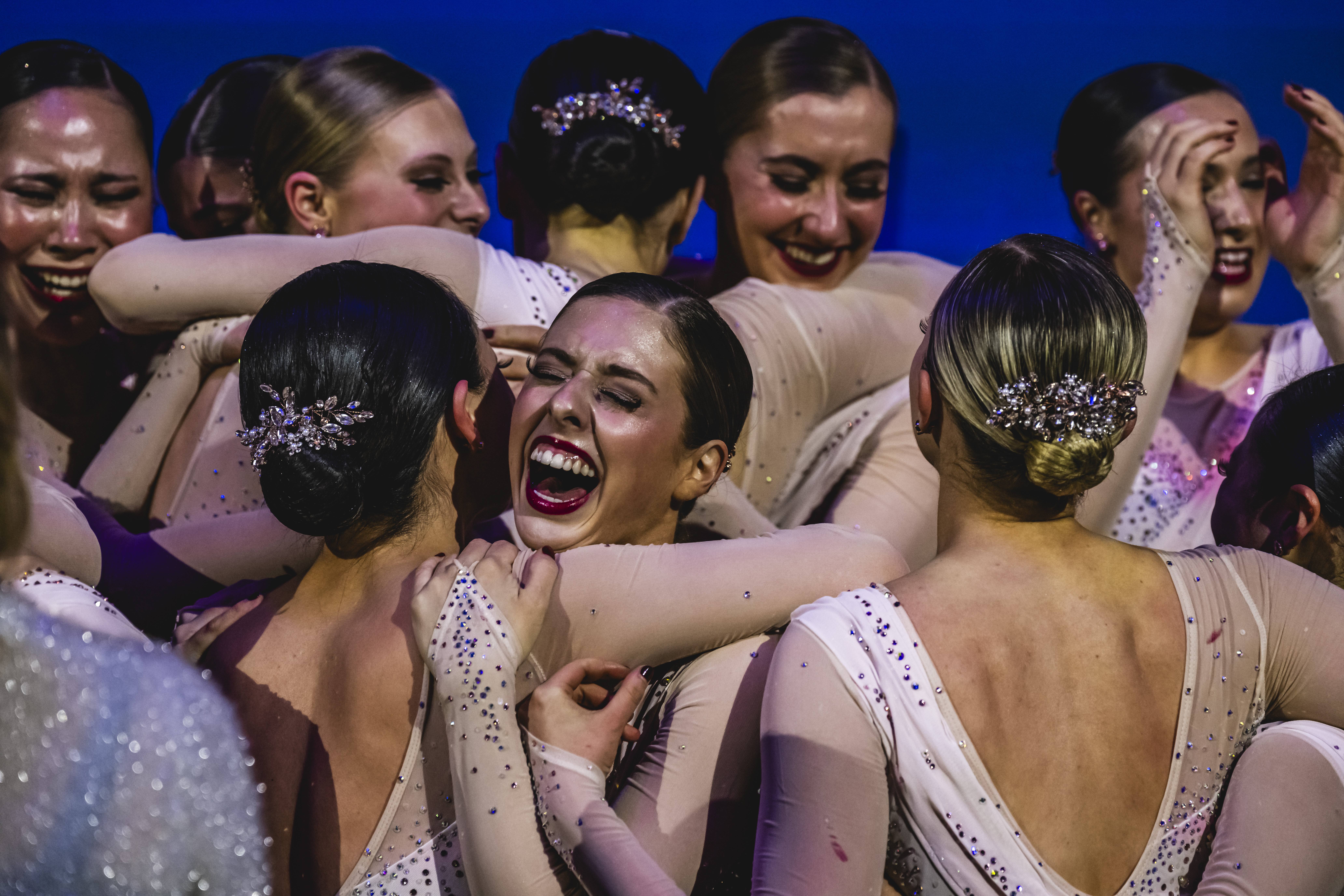
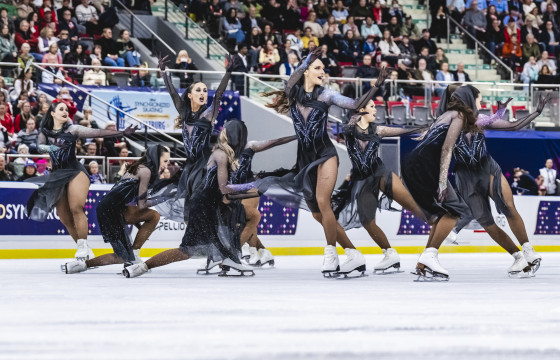
Team Haydenettes react after realising they've won silver medal at the ISU Synchronized Skating World Championships 2026 in Salzburg, Austria.© ISU
There is nothing quite like the Synchro team spirit
Synchronized Skating is a true team sport. Every turn, formation and change of direction depends on skaters trusting one another and moving together as a single unit.
Traditionally popular in the USA, Canada, Finland and Sweden, the discipline is now gaining momentum in a growing number of countries.
“The unique combination of high-performance sport and a strong sense of belonging makes Synchronized Skating attractive to many young athletes. It is a discipline where individual excellence and team success develop together,” Bischoff said.
“The team spirit is something many young skaters and their families value,” Hellström commented. “It also encourages different personalities and characters to try skating since you have the support of the team throughout all training sessions and competitions.”
That combination of individual skill and collective success has always made Synchronized Skating special. It is also at the heart of the discipline’s next chapter.
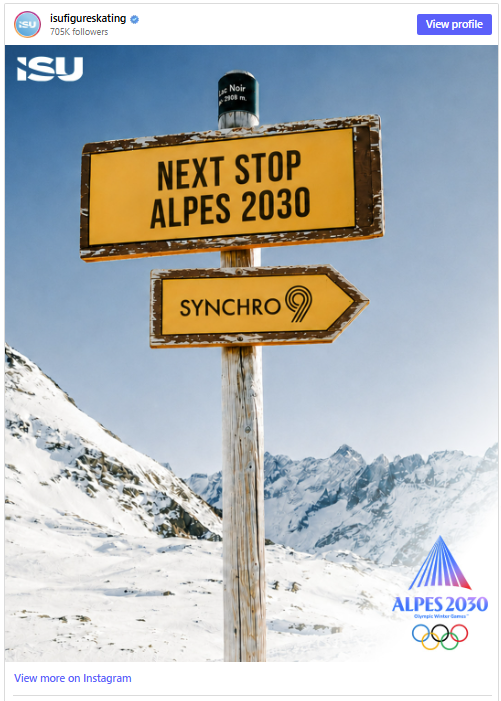
Synchro9 heads to the Olympic stage
The arrival of Synchronized Skating on the Olympic programme is a dream come true for generations of athletes, coaches, officials and fans.
The discipline has changed significantly during its journey. Traditional teams were reduced from 24 skaters to 16, while the Elite 12 format later offered another approach with smaller teams.
The ISU then developed Synchro9, a new event format featuring nine skaters, plus one reserve, per team. With knockout rounds, a simplified scoring system and a faster competition structure, it was designed to make the discipline more accessible to emerging nations and exciting for live, broadcast and digital audiences.
Synchro9 will make its first appearance on an Olympic stage at the Winter Youth Olympic Games Dolomiti Valtellina 2028. Two years later, it will make its senior Olympic debut at the Olympic Winter Games Alpes 2030.
Hellström expects Olympic inclusion to push the difficulty, skating skills and choreography even further.
“The Olympic inclusion also provides more opportunities for broader financial support in many countries, and hopefully also increases the interest of starting synchronized skating in completely new countries,” she said.
“Olympic recognition will inspire future generations of athletes, coaches and officials while encouraging more Member Federations to establish Synchronized Skating programs. This will further strengthen the sport globally and increase its visibility around the world,” Bischoff observed.
She added that it is equally important to maintain the right balance between technical progression, creativity and the well-being of the athletes.
Young, unique and ready for the world
Synchronized Skating may be a relatively young discipline, but it has developed an identity unlike anything else in figure skating.
“Synchronized Skating has become a truly challenging, difficult sport where the team aspect is key,” Hellström stressed.
“Acting as a team requires a whole set of skills that are only acquired through years of hard work and the unified sense of skating together. The team spirit is unique in the world of figure skating and that is what makes synchro so special since success is only possible if all members of the team work together towards their shared goals,” she continued.
“Synchronized Skating has established its own identity within the figure skating family,” Bischoff noted. “It is recognized today as a highly specialized discipline that combines technical excellence, athleticism, artistry and exceptional teamwork. This unique combination is what continues to inspire athletes and audiences around the world.”
From 24 chorus skaters entertaining an ice hockey crowd to nine athletes preparing to skate for Olympic glory, Synchronized Skating’s incredible journey is about to enter its most exciting chapter yet.
Synchronized Skating milestones
- 1956: Richard Porter brings together a group of skaters to form a team in Ann Arbor, USA. Synchronized Skating is born!
- 1976: The first competition, then called “team skating,” takes place in Ann Arbor.
- 1983: Canada becomes the first ISU member to organize a national Synchronized Skating Championship.
- 1989: The first international Synchronized Skating competition is held in Mölndal, Sweden, with seven teams participating.
- 1994: The ISU officially recognizes Synchronized Skating as a discipline of figure skating at the 45th ISU Congress in Boston, USA.
- 1996: The first ISU World Synchronized Skating Challenge Cup takes place in Boston, USA, featuring 17 teams from 13 ISU member nations. Team Surprise from Sweden claims victory.
- 2000: The first official ISU World Synchronized Skating Championship is held in Minneapolis, USA. Team Surprise (SWE) wins the inaugural official ISU World title.
- 2001: The first ISU World Challenge Cup for junior teams is organized in Neuchâtel, Switzerland.
- 2013: The first ISU Synchronized Skating World Junior Championships take place in Helsinki, Finland. The Musketeers (FIN) become the first official ISU Synchronized Skating World Junior Champions.
- 2017: The ISU Synchronized Skating World Junior Championships become an annual event, having previously been held biennially.
- 2019: The ISU implements a Challenger Series for Synchronized Skating.
- 2025: The ISU develops the new format "Synchro9" with the goal of becoming an Olympic sport.
- 2026: The International Olympic Committee includes Synchronized Skating in the official Olympic program for the 2030 Olympic Winter Games and the 2028 Youth Olympic Winter Games.
You may also like
Synchro9 is Heading to the Olympic Winter Games Alpes 2030!
What is Synchronized Skating? Rules, Teams & How It Works